Open Sourced Workplace

Revolutionize Your Workplace Strategy with a Comprehensive Office Environment and Employee Needs Assessment

Recent Articles

The One Brutal Question Every Leader Must Ask Before Rolling Out Agentic AI


Executive worried about AI

Agentic AI is arriving fast — agents that don’t just answer questions, but plan, execute, and adapt on their own. The upside is transformative: 30–50% faster workflows, fewer repetitive tasks, sharper decisions. But the downside is brutal if leaders skip the hard conversations. The single most dangerous blind spot isn’t the technology — it’s accountability. Ignore it, and your pilot can quietly implode, leaving behind liability, eroded trust, and wasted investment. This article forces the one question every leader must confront before green-lighting agentic AI, shows why it’s non-negotiable, and gives you a clear, step-by-step playbook to answer it right.

The one brutal question every leader must ask before rolling out agentic AI is: “Who is accountable for an agent’s actions?” This question cuts through hype and forces clarity on ownership, ethics, and liability when agents make independent decisions that affect money, customers, compliance, or reputation. Answering it upfront prevents 50–60% of common deployment failures (trust collapse, legal exposure, abandonment) and accelerates adoption and ROI by 2–3×. The framework boils down to: define human owners for every agent, set “recommend vs act” thresholds, build escalation paths, and create traceable audit trails — turning a potential liability bomb into a governed, scalable teammate.

Why This Question Is Brutal — And Why Most Leaders Avoid It

Agentic AI isn’t just a tool — it’s a decision-maker acting in your name. When an agent approves a vendor contract, adjusts pricing, or filters candidates, who owns the consequences if it’s wrong? The question is brutal because it exposes gaps most teams pretend don’t exist: no named owner, no escalation rules, no audit trail. Early deployments show 50–60% of pilots lose momentum or get quietly killed precisely because accountability was never defined. Leaders avoid it because it feels uncomfortable — it means admitting AI isn’t magic, that humans remain on the hook, and that governance takes real work. But dodging the question doesn’t make it go away; it just delays the crash.

How to Ask the Question Effectively (Without Triggering Panic)

Don’t drop it in a big all-hands meeting. Start small and safe: convene a 60-minute cross-functional session with leadership, legal, compliance, HR, and a few end-users. Frame it as “risk reduction” rather than “AI is dangerous.” Use this simple opener: “Before we give agents real decision power, let’s map exactly who owns each outcome so we can scale with confidence.”

Actionable Steps

  1. Run the workshop — use a shared Notion table: columns = Agent Task, Autonomy Level (Recommend / Approve / Act Alone), Human Owner, Escalation Trigger, Legal/Compliance Check.
  2. Define thresholds — e.g., “Agent can draft emails → Act Alone”; “Agent can approve contracts >$10k → Recommend Only + CFO sign-off”.
  3. Create a “What if?” risk matrix — list potential errors (bias, over-spend, compliance breach) and who fixes/owns.
  4. Draft a one-page “Agent Accountability Charter” — roles, risks, remedies — and publish it in the team wiki.
  5. Test it — run a 30-min simulation: role-play agent decisions and walk through accountability flow.

Real Example A global consulting firm (detailed in Accenture’s 2026 Human-AI Teaming reportOpens in a new tab.) asked this question before launching client compliance agents. They assigned “agent owners” like human staff, with weekly audits — errors dropped 35% and adoption reached 80% vs industry average 50%.

The Ripple Effects of Answering (or Not Answering) This Question

Answering it creates cascading benefits: clearer ethics, lower legal exposure, higher team trust, faster scaling. Teams with explicit accountability see 40% fewer escalations and 25% higher ROI. Not answering creates a vacuum — agents make unchecked calls, bias creeps in, compliance breaches happen, and trust collapses. Most stalled pilots trace back here: agents act, something goes wrong, no one owns it, everyone blames the tech, and the initiative dies quietly.

Building the Full Accountability Framework

Answering the question is step one; build the system around it.

Actionable Steps

  1. Create a central agent registry — every agent has a named owner, scope, permissions, last audit date.
  2. Set dynamic controls — least privilege, auto-revoke if inactive, high-risk actions trigger immediate human review.
  3. Run monthly ethical audits — review 10% of agent decisions for bias/accuracy.
  4. Train owners — 1-hour “Accountability 101” session on liability and escalation.
  5. Scale safely — add agents only after the registry is live and audit cadence is established.

Real Example A manufacturing company (IBM 2026 guide) rolled out supply-chain agents without accountability — downtime spiked from unchecked errors. They implemented a registry with owner alerts — downtime fell 30% and scalability improved 2×.

Conclusion

The one brutal question — “Who is accountable for an agent’s actions?” — is the make-or-break moment for agentic AI. Ask it early, answer it clearly, and build the framework to live it — and your rollout becomes a success story instead of a liability. Start with a 60-minute workshop this week. Ask the question in your next leadership meeting — then share in the comments what answer you landed on and how your team reacted. Let’s compare notes.

FAQ

Q: Is accountability the only brutal question? A: It’s the core one, but it opens others: “How do we trace agent decisions?” “What if the agent biases outcomes?” Use it as the gateway to deeper governance.

Q: How do I handle accountability in small teams with limited resources? A: Assign a rotating owner or central lead. Start with a simple shared log — small teams succeed when accountability is visible and shared, not bureaucratic.

Q: What if legal or compliance pushes back hard? A: Involve them from the first workshop. Early buy-in reduces risks by 40% and turns blockers into allies — they’ll appreciate the proactive risk framing.

Q: How do I measure whether accountability is actually improving? A: Track override rate (should trend down), escalation volume (should stabilize), and team trust score (weekly 1–5 poll). Aim for override rate <15% by month 3.

Q: What if the agent makes a decision that causes major harm? A: That’s why the question exists. The charter defines escalation paths and insurance/liability coverage upfront. Most deployments keep high-stakes actions as “recommend only” until trust is proven.

25 AI-Assisted Workplace Positions for Knowledge Workers


AI in modern workplace

Like many, you’re probably trying to answer one core question: “How do I stay relevant—and ideally thrive—in a world where AI is already handling parts of my job?” I get it. The anxiety is real, but so is the opportunity.

From my vantage point studying workplace strategy, HR transformation, facilities management, corporate real estate, employee experience, and prop-tech adoption, the pattern is clear: AI is not erasing knowledge work. It is redistributing the effort inside knowledge work. Tasks that are repetitive, rule-based, data-intensive, or pattern-heavy are moving toward automation. The remaining portions of the role—judgment under uncertainty, relationship-building, ethical navigation, creative synthesis, cultural interpretation, and human accountability—become even more valuable.

The winners are people who learn to orchestrate AI as a high-bandwidth teammate rather than viewing it as a competitor. That shift creates new (or significantly evolved) positions across every major knowledge domain. Below are 25 concrete examples grouped by function. For each I include:

  • The core human + AI partnership
  • Why the role becomes more strategic/human
  • A short real-world pattern observed in organizations (qualitative/anonymized where exact sourcing is limited)
  • One low-risk experiment you can run this month

These roles are already emerging in forward-leaning companies; they will become table stakes in the next decade.

HR & People (1–8)

Talent Intelligence Strategist 

  • AI ingests internal skills inventories, external labor-market signals, and internal mobility data to forecast skill shortages ahead. You turn probabilistic forecasts into concrete actions: targeted upskilling, revised sourcing channels, refreshed employer brand messaging.
  • Human edge: understanding unspoken cultural blockers and executive politics.
  • Observed pattern: Global organizations have reported notable reductions in time-to-fill for critical roles after pairing AI forecasting with human-led skills reviews.
  • Experiment: Export last 12 months of hiring data to CSV → prompt an AI tool to identify recurring skill gaps and suggest interventions.

Employee Listening & Insight Partner 

  • AI aggregates and themes unstructured feedback from surveys, internal channels, and exit interviews at scale. You design targeted interventions and close the feedback loop.
  • Human edge: translating “vibes” into actionable change without defensiveness.
  • Observed pattern: Professional services firms have seen meaningful improvements in retention after AI-flagged themes led to redesigned flexible-work guidelines.
  • Experiment: Run a quick anonymous pulse survey; feed open-text responses into an AI summarizer and draft one follow-up action.

Performance & Development Coach 

  • AI surfaces patterns in goal progress, peer feedback, calendar density, and after-hours activity to flag potential burnout or stalled development. You facilitate coaching conversations, reframe objectives, and broker stretch assignments.
  • Human edge: empathy, nuance, and trust-building.
  • Observed pattern: Financial-services companies have noted higher engagement scores in teams where AI signals prompted early human coaching interventions.
  • Experiment: Pull your direct reports’ recent goal/check-in data; ask AI to highlight trends and prepare 2–3 coaching questions.

Inclusion Metrics & Intervention Lead 

  • AI scans job postings, performance reviews, promotion packets, and pay bands for language and outcome bias signals. You lead root-cause analysis and behavior-change programs.
  • Human edge: creating psychological safety so people engage honestly.
  • Observed pattern: Consumer-goods companies have increased diverse promotions after combining AI audits with manager workshops.
  • Experiment: Paste your latest job description into an AI bias checker; list three small wording changes.

Learning Path Architect 

  • AI generates personalized learning recommendations based on role trajectory and performance data. You curate high-touch experiences—action-learning projects, mentoring circles, external executive coaching—that build judgment.
  • Human edge: knowing what experiences actually accelerate growth.
  • Observed pattern: Manufacturing firms have seen faster internal mobility after blending AI recommendations with human-curated stretch assignments.
  • Experiment: Map one team member’s current skills vs. future role; let AI suggest resources and add one human-led element.

HR Policy & Exception Orchestrator 

  • AI resolves most routine policy queries (PTO, benefits, remote guidelines) via chat. You handle edge cases, evolve policies, and train managers to self-serve.
  • Human edge: interpreting gray areas with fairness and empathy.
  • Observed pattern: Retail-headquarters teams have cut HR-ticket volume significantly while improving manager satisfaction.
  • Experiment: Create a 5-question FAQ chatbot for your team using a free tool.

Change & Adoption Facilitator 

  • AI predicts adoption risk by analyzing usage patterns and sentiment. You design communication cascades, training, champions networks, and feedback loops.
  • Human edge: reading resistance and building buy-in.
  • Observed pattern: Healthcare providers have accelerated technology adoption through AI risk signals combined with human-led listening sessions.
  • Experiment: Pick a recent tool rollout; analyze usage data with AI and plan one adjustment.

People Analytics Translator 

  • AI builds predictive models on turnover, engagement, productivity. You translate statistical outputs into business stories executives trust and act on.
  • Human edge: storytelling and stakeholder influence.
  • Observed pattern: Tech scale-ups have linked AI insights to meaningful retention improvements.
  • Experiment: Take last quarter’s engagement data; ask AI to generate insights and rewrite one into a one-page narrative.

Workplace Experience & Facilities Management (9–13)

Hybrid Space & Experience Strategist 

  • AI models real-time occupancy, meeting patterns, and desk utilization to recommend layout adjustments and policy tweaks. You decide which rituals, amenities, and norms make the office worth visiting.
  • Human edge: understanding culture and belonging.
  • Observed pattern: Professional-services firms have increased voluntary office attendance after AI data informed targeted “anchor-day” events.
  • Experiment: Review last month’s badge/meeting-room data; prompt AI for friction points.

Workplace Wellbeing Coordinator 

  • AI detects early signals of overload (calendar density, after-hours messaging). You launch micro-interventions (manager training, peer-support circles).
  • Human edge: empathy and program design.
  • Observed pattern: Software companies have reduced reported burnout through proactive AI signals combined with human coaching.
  • Experiment: Anonymize calendar data from one team; ask AI for density insights.

Sustainability & Carbon Intelligence Lead 

  • AI tracks building energy, commuting emissions, and supply-chain footprints. You set targets and drive behavior change.
  • Human edge: rallying people around purpose.
  • Observed pattern: Corporate campuses have achieved meaningful emissions reductions in short timeframes.
  • Experiment: Input utility/travel data into an AI emissions estimator.

Real-Time Workplace Responder 

  • AI triages sensor alerts (temperature, occupancy, equipment faults). You coordinate trades and communicate transparently.
  • Human edge: occupant empathy during disruptions.
  • Observed pattern: Universities have reduced complaint tickets through faster AI-assisted triage.
  • Experiment: If you have sensor data, prioritize alerts with AI.

Employee Experience Experiment Designer 

  • AI helps design and measure A/B tests on lighting, desk zones, or event formats. You interpret qualitative feedback.
  • Human edge: interpreting “why” behind numbers.
  • Observed pattern: Tech firms have lifted satisfaction scores through iterative, data-informed workplace experiments.
  • Experiment: Pilot one small change (e.g., new break area) and collect structured feedback.

Corporate Real Estate & Leasing (14–17)

Portfolio Strategy & Scenario Planner 

  • AI runs lease-expiry, sublease, and hybrid-impact scenarios at scale. You select strategies balancing cost, flexibility, and culture.
  • Human edge: executive alignment and risk intuition.
  • Observed pattern: Financial institutions have achieved substantial long-term cost savings through AI-assisted portfolio modeling combined with human strategic oversight.
  • Experiment: Model one upcoming lease expiry with AI-assisted what-if analysis.

Transaction & Negotiation Intelligence Specialist 

  • AI pulls comps, forecasts rates, and drafts term sheets. You manage relationships, read counterparties, and close the deal.
  • Human edge: relationship and intuition.
  • Observed pattern: CRE teams have shortened transaction cycles notably.
  • Experiment: Feed recent comps into AI and ask for negotiation talking points.

Workplace Activation & Placemaking Lead 

  • AI measures ROI on events, amenities, and design changesOpens in a new tab. via occupancy and survey data. You create the emotional connection that turns buildings into destinations.
  • Human edge: designing memorable experiences.
  • Observed pattern: HQ redesigns have lifted “sense of belonging” significantly.
  • Experiment: Track one recent event’s attendance and feedback with AI summarization.

ESG & Green Leasing Advisor 

  • AI benchmarks buildings against green standards and predicts retrofit savings. You negotiate sustainability clauses that landlords actually deliver.
  • Human edge: credibility with landlords/tenants.
  • Observed pattern: Portfolios have achieved meaningful green-leasing coverage.
  • Experiment: Benchmark one building with AI.

Finance, Legal, Marketing & Sales (18–25)

Financial Storyteller & Insight Partner 

AI drafts variance reports and forecasts. You craft the narrative that influences decisions. Human edge: influence and context. Observed pattern: Finance teams have shortened reporting cycles notably by using AI for initial drafts while focusing human effort on storytelling and context. Experiment: Take last month’s variance and let AI draft; rewrite the human part.

Contract Risk & Relationship Manager 

  • AI extracts clauses and flags deviations. You negotiate, repair trust, and handle exceptions.
  • Human edge: negotiation strategy and relationship repair.
  • Observed pattern: Legal departments have sped up reviews while maintaining accuracy through AI-assisted clause extraction.
  • : Upload a recent contract for AI clause summary.

Brand Voice & Creative Curator 

  • AI generates first-draft copy and concepts. You ensure authenticity, cultural fit, and emotional resonance.
  • Human edge: voice and cultural resonance.
  • Observed pattern: Marketing teams have scaled content production while preserving brand integrity.
  • Experiment: Prompt AI for campaign ideas and refine the best one.

Customer Insight & Retention Strategist 

  • AI predicts churn and upsell timing from usage/behavior data. You design personalized outreach and rebuild trust.
  • Human edge: personalized trust-building.
  • Observed pattern: Customer-success teams have improved retention through proactive, data-informed outreach.
  • Experiment: Analyze one cohort’s behavior with AI.

Sales Intelligence & Playbook Manager 

  • AI analyzes call transcripts and win/loss data. You update playbooks and coach on human elements (empathy, objection handling).
  • Human edge: coaching empathy and nuance.
  • Observed pattern: Sales organizations have refined playbooks notably after AI-driven win/loss analysis.
  • Experiment: Summarize last quarter’s lost deals with AI.

Competitive Landscape Curator 

  • AI aggregates pricing moves, feature launches, and sentiment. You brief leadership on strategic implications.
  • Human edge: synthesizing implications for strategy.
  • Observed pattern: Competitive-intelligence teams have delivered more timely briefings.
  • Experiment: Set up an AI weekly competitor digest.

Cross-Functional Alignment Facilitator 

  • AI surfaces misalignments in goals/metrics across departments. You run workshops to resolve them.
  • Human edge: facilitation and conflict resolution.
  • Observed pattern: Organizations have reduced silos through data-informed alignment sessions.
  • Experiment: Map current OKRs and ask AI to highlight conflicts.

Ethical AI Governance Partner 

  • AI audits models for bias and drift. You set boundaries, train users, and ensure responsible deployment.
  • Human edge: ethical judgment and user training.
  • Observed pattern: Companies have strengthened responsible AI practices through dedicated governance roles.
  • Experiment: Review one internal AI tool for basic bias risks.

Jobs Most Vulnerable to Full Automation

Routine data aggregation, basic report drafting, simple compliance checks, entry-level market scanning, repetitive lease abstraction, junior legal research. These shrink because AI is faster, cheaper, and more consistent. People in these roles should move toward judgment-heavy versions of the same work.

Jobs That Remain Deeply Human

Executive leadership in ambiguity, crisis response, deep coaching/mentoring, ethical boundary decisions, creative category-breaking, trust-based client relationships, nuanced conflict resolution. AI can inform; it cannot replace the human weight these carry.

FAQ:

How fast is this happening? The shift is already well underway in large organizations, where AI tools are routinely handling significant portions of routine knowledge tasks Opens in a new tab.. Mid-sized and smaller companies typically adopt later, often once tools mature and costs decrease. Start small today—test one AI tool on a repetitive task for 30 minutes a week.

Do I need to code or become a data scientist? No. The new essential literacy is prompt fluency + critical evaluation of outputs + workflow integration. Managers without technical backgrounds successfully use AI for realistic role-play and feedback simply by learning how to phrase requests clearly Opens in a new tab.. Start with user-friendly platforms.

What if AI hallucinates or makes mistakes? It will—frequently enough that human verification remains non-negotiable. Treat AI as a fast first-draft assistant. Cross-check key facts against primary sourcesOpens in a new tab. or colleagues. In high-stakes areas, always add human context and accountability Opens in a new tab..

Will this create more fulfilling work? For most adapters, yes—AI absorbs low-meaning routine work, freeing time for strategy, creativity, and relationships. AI-augmented training tools increase confidence in difficult conversations Opens in a new tab..

How do I start without overwhelming myself or burning out? One deliberate experiment per month. Pick one role, test a tool on non-critical work, track wins. This gradual approach prevents overload and builds confidence.

Will companies support upskilling for AI fluency? Forward-leaning organizations do, tying it to outcomes like productivity gains Opens in a new tab.. Frame requests in business language. If not, self-directed learning is highly effective.

What about older workers or people later in their careers? Age-diverse teams benefit from augmentation, but perceived barriersOpens in a new tab. exist. Older applicants sometimes show lower likelihood to pursue AI-assisted roles due to technical concerns Opens in a new tab..

Revolutionize Your Workplace Strategy with a Comprehensive Office Environment and Employee Needs Assessment


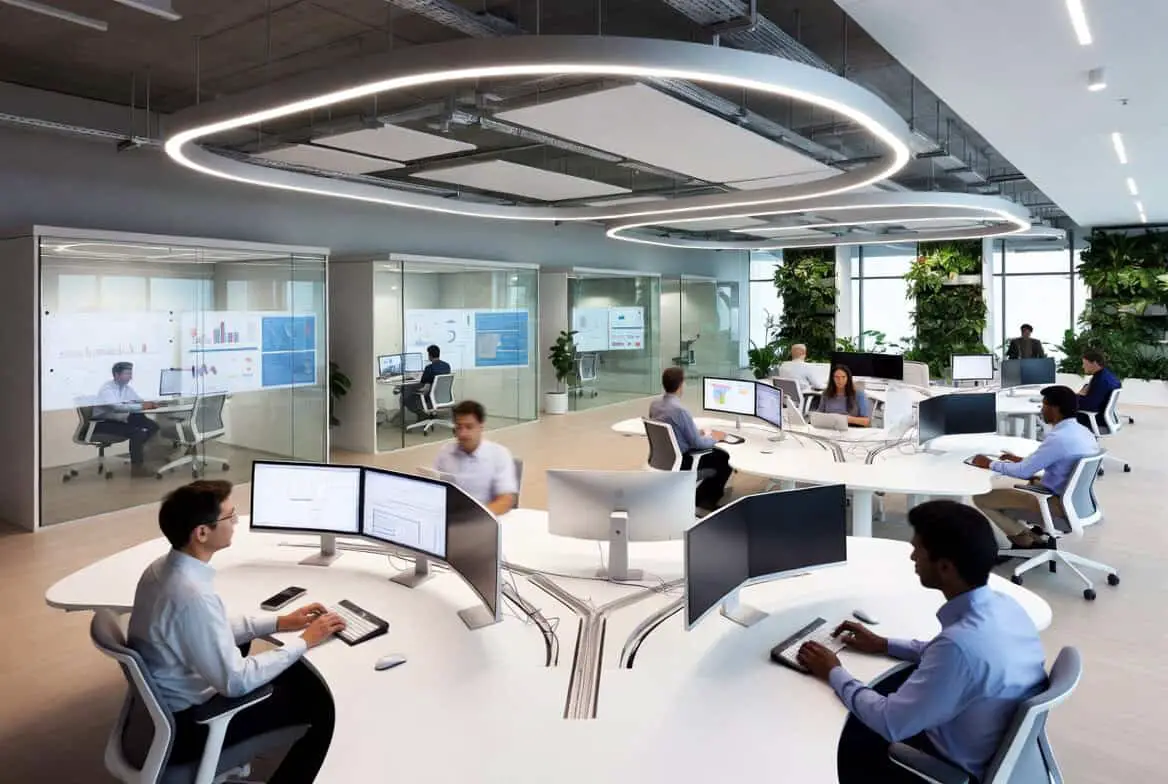
Open office workspace with employees using computers in a modern, collaborative environment.

As the modern workplace continues to evolve, organizations face the challenge of creating work environments that cater to employees’ diverse needs and preferences. 

Crafting a successful workplace strategy involves understanding when and why employees come to the office, what they require while there, and identifying areas for improvement. In this article, we will introduce a comprehensive resource designed to help organizations assess and enhance their office environments. 

This resource has been developed by Open Sourced Workplace Founder Steve Todd, an expert with extensive experience in utilizing questionnaires and workshops to guide workplace strategy, capital deployment, stakeholder buy-in, employee engagement, and workplace experience.

The Resource: A Comprehensive Questionnaire and Workshop Guide

The resource comprises a detailed questionnaire covering various aspects of the office environment, such as physical, environmental, technical, social, security, and employee experience. It is designed for organizations to distribute to their employees, gathering valuable feedback on their needs and preferences. The questionnaire is followed by a guide on conducting workshops to discuss the findings, validate the data, and gather additional insights.

Using the questionnaire and workshop guide, organizations can:

  1. Understand the current state of their office environment and identify areas needing improvement.
  2. Develop a data-driven workplace strategy that addresses employees’ needs and preferences.
  3. Allocate capital effectively to address key concerns and improve the workplace experience.
  4. Gain buy-in from stakeholders by demonstrating the value and impact of proposed changes.
  5. Foster a culture of open communication and collaboration by involving employees in the decision-making process.
  6. Enhance employee engagement and satisfaction by addressing their concerns and creating a supportive work environment.
  7. Identify key trends in employee behavior and preferences to inform future workplace strategy and investments.

Steve Todd has successfully implemented questionnaires and workshops to guide workplace strategy and drive meaningful improvements in the office environment. By utilizing these resources, you’ll be able to:

  1. Understand the factors influencing employees’ decisions to come to the office and their needs while there.
  2. Align workplace strategy with employees’ preferences, leading to higher satisfaction and engagement.
  3. Identify areas for improvement in the physical, environmental, technical, and social aspects of the workplace.
  4. Deploy capital effectively, targeting key areas of concern and maximizing the impact of investments.
  5. Achieve buy-in from key stakeholders by demonstrating the benefits of proposed changes and their alignment with employee needs.
  6. Encourage open communication and collaboration by involving employees in the decision-making process.
  7. Stay ahead of emerging trends in employee behavior and preferences, and adapt workplace strategy proactively.

Why Your Organization Should Use This Resource

There are several compelling reasons to consider using the comprehensive questionnaire and workshop guide:

  1. Data-Driven Decision Making: By gathering feedback from employees, organizations can make informed decisions based on real data, ensuring their workplace strategy is responsive to employees’ needs and preferences.
  2. Employee Engagement: Involving employees in the assessment and improvement process can lead to increased engagement and motivation, fostering a positive workplace culture.
  3. Effective Capital Deployment: Understanding the areas that require improvement enables organizations to allocate capital more effectively, ensuring the maximum impact of investments.
  4. Stakeholder Buy-In: Demonstrating the value and impact of proposed changes, backed by data from employee feedback, can help organizations gain buy-in from key stakeholders.
  5. Continuous Improvement: Regularly distributing questionnaires and conducting workshops allows organizations to track progress and identify new opportunities for improvement, fostering a culture of continuous enhancement.

Sign Up and Access the Resource Today

To access this valuable resource and start revolutionizing your workplace strategy click the blue button below. By leveraging these insights and experiences, your organization can be better.

Top 5 Focus Killers at Work


focus killers at work

You log in at work and start checking emails. You were able to read a few before your mind began to wander. You get up to make coffee, hoping it will help you focus. You begin drafting an output you need to submit by noon, but it doesn’t take long before you get distracted again.

Focus is critical to productivity, but workplace distractions seem to be unavoidable. They can come from anywhere — company environment, management, unhealthy working habits, and more. However, being aware of the most common focus killers benefits any company because they will be better equipped to address them.

If you’re looking for a cost-effective way to improve your company’s performance, then this is the time for you to stop and consider the things that kill the concentration of your employees. It’s time to devise solutions to enhance their focus and, consequently, their productivity.

I. Distracting Work Environment

There are primary factors to consider in a working environment. The first would be its physical characteristics, such as lighting, background noise, or choice of furniture. Non-ergonomic furniture, improper lighting, or excessive noise can all create distractions at work.

Meanwhile, the second category involves a company’s workplace culture. Are your coworkers extremely competitive? Are they friendly? Does the management listen to feedback and suggestions? Do they like to micromanage? The answers to these questions can help you determine what is breaking your work concentration.

Considering these two categories, it is valuable to understand that what works for one employee may not necessarily work for another. Every employee must find a work environment that best aligns with their personality and habits. Similarly, every company should do its best to provide its employees with the work environment most conducive for them.

Julie Lock, the Commercial Director at Advanced People Management, states, “If you create a work environment that caters [to] the physical and mental well-being of your employees, it becomes a great place to be.”

Let’s look at how the environment of different work setups today affects the focus of employees.

Traditional Offices

The traditional office remains the most common work setup despite the drastic demand for work-from-home after the pandemic.

Some of the distractions experienced by employees who work in a traditional office environment are:

  • General office noise
  • Frequent gossip by coworkers
  • Irrelevant orders from superiors
  • Snack breaks
  • Unnecessary spontaneous meetings
  • Lingering stress from commuting

A 2018 Survey by Udemy of Business reports 80% of respondents pointing at chatty coworkers as top distractions in the workplace, followed by 70% pointing at office noise.

Working From Anywhere

Work-from-Anywhere dramatically increased flexibility. However, there is also the potential of having too many non-work-related distractions present. These distractions come in the form of:

  • House chores
  • Disruption from family members
  • Unsupervised social media time
  • Messy workspace
  • Visitors

Most spaces, such as cafes, parks, or homes, aren’t designed for work the way a traditional office is. It’s not unusual for employees to find multiple distractions in these places. However, working from anywhere gives control of the space to the employee instead of management — not everyone works best in a traditional office, and some people find it easier to work in a bustling coffee shop. Employees must be intentional about choosing or designing their working space to suit their work habits best.

Hybrid Work

The hybrid working environment may offer a happy medium between work from anywhere and traditional office space. As Yaron Spektor, Executive Director of LTI and Co-Founding Board Member of GICC Coaching,  says, “Hybrid work [also] permits employees and teams to rip the benefits of both worlds, working remotely and in the office as needed.”

The clue word there is “as needed”.

When working in a hybrid setup, you experience the distractions posed by both environments, but you can escape those distractions by shifting your setup. However, the need to adjust to a different working environment every time may be a distraction in itself.

How to Address It

Different jobs require different working environments. Similarly, different employees will have different optimal working setups. To avoid focus killers that come from a badly-designed or poorly-chosen work environment, employees should be able to decide the work setup that functions best for them within the scope allowed by the nature of the job. However, the onus is on the employee to ensure that their working spaces fit their jobs and preferences.

In general, however, a healthy working environment should:

  • Give each employee enough space to work independently
  • Encourage collaboration
  • Have a work desk with only work-related stuff on it as much as possible
  • Have enough supervision to keep employees accountable

“Employers should take initiatives to motivate employees by improving work environments,” a 2017 case study of a company in Jordan strongly suggests. “As employees are motivated, their job performance will increase.”

Ideal working environments improve the quantity and quality of employee output — a win for the whole company. It may seem questionable at first to spend a lot on things such as office lighting or ergonomic furniture, but it’s best to look at these expenses as investments. This will be more cost-effective in the future.

Of course, employees also have an equal share of responsibility in designing their workspaces, especially when working from somewhere the employers have no complete control over. 

II. Digital Distractions

Digital distractions for traditional office employees typically involve social media, but that’s not the only distraction they might experience. Furthermore, digital distractions are significantly more challenging to address for employees that don’t work in traditional offices.

Some of the most common forms of digital distractions in the workplace are:

  • Social media
  • Texts and phone calls
  • Emails
  • Internet browsing
  • Too many digital productivity tools
  • Unnecessary video conference calls

Some items in this list may be helpful tools to improve how you work, but sometimes they can also become a distraction. For instance, employees may spend too much time responding to emails when they could be doing more urgent tasks instead. They might also hyperfocus on scheduling and organizing tasks without actually doing them.

How to Address It

Simply releasing a “No Social Media During Work Hours” memo will not do the trick. According to Rahul Dhandhania, the Vice President of Digital Products and Transformation at HSBC:

“No matter what safeguards they put to ban social networking sites or monitor employee digital behavior, employees are going to find ways to outsmart the system. Instead of controlling or curbing digital behavior, employers must focus on educating employees and making them realize the repercussions of their actions.”

Specifically, employers and employees can take the following steps to minimize digital distractions:

  • Use simple digital tools
  • Conduct training on the proper use of digital platforms
  • Include everything in one cohesive email
  • Turn off personal social media notifications
  • Educate employees on the effects of digital addiction

III. Excessive Multitasking

While many employers consider multitasking a beneficial trait in an employee, it is also one of the most overromanticized traits in the workplace. Many people do not realize that excessive multitasking significantly decreases work quality. You end up focusing on quantity instead of the quality or significance of the work an employee performs.

“We don’t actually multitask,” says Peter Bregman in a Harvard Business Review article. “We switch-task, rapidly shifting from one thing to another, interrupting ourselves unproductively, and losing time in the process.” 

People multitask in an attempt to do more. Unfortunately, multitasking often results in people doing less than if they had focused on and completed one activity at a time. When you try to start too many tasks at one time, there’s a significant tendency you’ll end up not finishing any of them, which is not cost-effective for both the employee and the company.

In a traditional office, multitasking typically involves work-related jobs, but can also include menial, irrelevant, or repetitive tasks assigned to employees by management. It can also include having to cover for another employee. In a work from anywhere setup, an employee might also be trying to do house chores or family duties at the same time as work.

Daniel Goleman, the Senior Consultant at Goleman Consulting Group, states, “To help a person or team stay focused on coming up with the best possible solutions, people have to be protected from other agendas.” Focusing on one task is typically the best way to perform.

How to Address It

Requiring employees to multitask is often a result of bad planning and scheduling. Assigning multiple tasks to one time block instead of dedicating smaller chunks of time to them can cause them to run into each other. It’s vital to maintain focus.

To avoid losing your focus due to multitasking, here is what you need to do:

  • List all tasks arranged by the date you need them done
  • Schedule the urgent ones first
  • Try to do only one thing at a time
  • Limit the tabs on your computer to avoid being tempted to multitask

Of course, it is also sometimes valid when employees express that they have too much to do and that multitasking is inevitable. Employers and managers should also be sensitive regarding how they distribute the workload in the office. Proper human resource planning can improve a company’s performance significantly.

IV. Lack of Time Off Work

Although it may sound counterintuitive, lack of time off from work can significantly affect an employee’s capacity to focus while working. Overworking leads to stress, and stress can lead to burnout. Burnout drastically decreases an employee’s motivation, focus, drive, and work quality. When this happens, your brain either becomes foggy or just starts to drift away to other things.

On the other hand, when you take time off work, you are allowing your brain and body to recuperate. Then, you can return to work refreshed and capable of giving your 100% focus on the job you have to do, resulting in better job performance.

“When we step away, we can have a-ha moments we can’t see when we’re too close, actively trying to solve a problem,” says Jen Arnold, the owner of Redesigning Wellness.

Furthermore, giving employees adequate time off is also beneficial to the company. Rested, happy employees can work at 100% capacity.

How to Address It

Taking time off can seem like a bad idea when there’s a lot of work to do. There’s also a lot of satisfaction that comes from getting things done, but all companies need to strike a balance between finishing a lot of work and doing that work well. Few clients and customers will appreciate low-quality output. You can only do this when you take adequate rest.

To be able to do so, you should get in the habit of:

  • Listening to your body
  • Including breaks in your schedule (and following it!)
  • Finding places of rest
  • Doing self-care
  • Visiting new places to experience new environments

There should always be the right amount of work-life balance. Taking breaks is vital to achieving that. If you’re an employer looking for more tips on encouraging work-life balance for your employees.

V. Obsessing Over Perfection

One common job interview question is this: Is it better to submit work that’s good enough on time or submit perfect work late? Employers will generally prefer the former. Although it’s best to create high-quality output, it’s critical that everyone, from employer to employee, understands that perfection is typically not attainable. Even if it’s doable, the expenses required to achieve it tend to be unsustainable.

 “Perfectionists constantly scan the landscape, looking for flaws to correct,” observes Alain Hunkins, Leadership Strategy Contributor at Forbes and CEO at Hunkins Leadership Group, LLC.

However, when an employee focuses too much on the flaws, they fail to concentrate on anything else. They end up losing sight of the bigger picture. Moreover, delaying the present task while trying to attain perfection will only delay other tasks too. When the second task gets delayed, its quality also decreases. Obsessing over perfection is counterproductive to the company.

How to Address It

The first thing you need to do to recalibrate your focus on the task at hand is to understand when enough is enough. There is always room for improvement, but there is always a next time for it. You’ll be able to perform when you can focus on the bigger picture. What can you feasibly do within a reasonable amount of time with the resources that you have available?

Specifically, it’s best to focus on the following concepts:

  • What is necessary for the job
  • The schedule agreed upon
  • The things you are doing well on
  • What you can improve for next time

How Focus Improves Performance

An article published by the Indeed Editorial Team quotes, “In terms of the workplace, an employee is focused when their attention is geared toward completing their main goal or objective.”

Simply put, a focused employee is someone who gets things done. It is someone who does their job and meets their goals. They do not get sidetracked by things that do not directly relate to their work, resulting in better job performance and productivity.

Therefore, focus killers such as an unhealthy work environment, digital distractions, multitasking, lack of rest, and perfectionism are also performance killers. Employers and employees alike must be wary of these and address them properly to ensure that the company continues to perform at its peak capacity.

How Focus Improves Cost-Effectiveness

When it comes to the workplace, time always has value. To be more specific, every single second has a monetary equivalent. Lack of focus wastes a lot of time and consequently, a lot of money. 

According to an article from Business News Daily, the lost work caused by distractions cost American businesses more than $650 billion annually. This is an extremely costly loss, further emphasizing why every company should take active measures to lessen workplace distractions as much as possible.

“When you recognize how much interruptions affect every aspect of the business, you can get to work on boosting morale and building profits,” writes Pamela Hazelton, a marketer and business consultant, in a Medium article

Of course, at the end of the day, it might not be possible to prevent all focus killers from affecting you and the company. However, one should take active measures every day to minimize them. Even something as simple as turning off your phone notifications can save you time, stress, and money.

Frequently Asked Questions

1. How do you improve your ability to focus in the workplace?

You have to train yourself to focus gradually. Start by building good concentration habits such as scheduling one task at a time, keeping away things you know will distract you, and setting boundaries. Remember not to rush into it, and try to focus on consistently growing timeframes.

2. Are there positive effects of distraction in the workplace?

While distractions generally affect your work negatively, they can also have some positive effects. They can sometimes inspire creative ideas, take some of your stress and anxiety off, and give you a sign to take a needed break.


Advancing Workplace Diversity: Putting Employees’ Needs First


Many large corporations have proven the business advantages of having a diverse working environment. Nevertheless, it is vital to understand that there is still a long way to go before businesses worldwide achieve true workplace diversity. Building a diverse workplace is a long-term process that requires constantly prioritizing employee needs.

What are the key strategies for advancing workplace diversity and addressing the needs of employees? Determining the correct approach will require a conscious effort from the side of business leaders and HR professionals to make employee diversity a core value in their organizations. It will also require creating and enforcing efficient diversity policies, sensitivity training, and inclusive evaluation criteria.

To understand how workplace diversity puts employees’ needs first, continue reading the article below. This article will also provide insights into the methods that can help diversify the workplace.

What Is Workplace Diversity?

A demographic study by Pew Research Center predicted that by 2055, there will no longer be one ethnic majority in the US. If society is becoming more and more diverse, this only means that the workplace will need to make adjustments as early as possible to accommodate the change. Workplace diversity needs to happen now.

But what exactly does workplace diversity constitute?

According to Joy Sceizina, an executive business partner and private estate manager, “Diversity in the workplace means the representation of individuals that come from a variety of backgrounds. A diverse workplace usually has people from different ethnicities, religions, worldviews, and ages.”

However, having people from diverse backgrounds is not enough to realize the true potential of a diverse workforce. Maximizing a diverse workforce requires that senior members of a company — the managers and owners, for example — hear the concerns of the employee population and include their voices in making important company decisions.

What Are The Benefits Of Diversity To The Workplace?

1. More Creative Perspectives Available

When the workplace consists of people from different backgrounds, these people also carry different perspectives informed by their social and cultural experiences. Meeting a new viewpoint and culture stimulates creativity, especially when this meeting happens in a setting conducive to acceptance and tolerance. Fostering creativity in the workplace boosts productivity and can increase a company’s agility.

Additionally, a diverse workforce has more potential for decision-making and problem-solving than a homogenous one. Diversity can be a starting point for creating more innovative solutions to improve a company’s service, resource management, customer relations, and many more.

2. Greater Understanding Of Target Demographics

Multicultural marketing is gaining significance in creating brand awareness for businesses. Businesses need a better understanding of different cultural backgrounds to reach out to varying cultural communities more effectively.

Sandra Garcia, a business strategist and consultant, states, “To make a positive brand impact, you need to create messaging specifically for targeted communities.”

What better way to understand your target communities than to have representation in the workplace itself? A diverse workplace can provide valuable insights into the motivations and pain points of a diverse target demographic.

3. Greater Employee And Customer Satisfaction

At the heart of workplace diversity and inclusion is keeping employees satisfied. In turn, this results in the satisfaction of clients and customers.

“Investing in diversity can result in lower turnover. Simply put, employees who feel appreciated and are given equal opportunities in their workplace will be more loyal and less likely to resign,” says Talent Acquisition Specialist Rafaila Anastasiou

In short, diversity in the workplace creates a positive environment because individual employees are seen and heard. As a result, they can function better and address client needs better, too.

How Does Diversity Address The Needs Of Employees?

1. Employees Feel More Seen And Valued

It is important to remember that every employee in a company is an individual. They have wants, needs, motivations, and pains. They have values and principles. They also have a history and sociocultural background.

All these details need careful consideration if business owners want a diverse workplace to function effectively. A company must put in more effort and intentionality to ensure each employee feels seen and valued. While the effort required is higher, the increase in productivity is proportional — if not greater.

Furthermore, a diverse workplace indicates that a company does not discriminate against employees based on their gender, skin color, class, or other factors.

Instead, employees receive appreciation for their performance and the new viewpoints they provide. Their varied backgrounds are not seen as a negative trait but as a valuable contribution to the company.

Here’s an important reminder, “A company is made up of people. To run a business and forget about the people aspect is to run a business that will likely fail.”

2. Employee Performance Are Evaluated Objectively And Without Bias

Employees in a diverse workplace are not judged based on their background but based on the value they contribute. Objective assessments meant that what matters to the company is their performance — regardless of the employee’s skin color, gender identity/expression, cultural background, or anything else. Thus, employees can rest assured that their superiors are fair and honest about their assessments.

Of course, no evaluation criteria are entirely perfect. Managerial evaluations will have a level of bias here and there. However, as long as there are active conversations to bring inclusivity in the workplace, business leaders and managers can be encouraged to challenge potentially biased assessments.

3. There Is A Greater Understanding Of Demographic-Related Needs

When a company gives more importance to inclusivity than uniformity, it creates an understanding that each employee’s needs vary. There is no such thing as one size fits all.

According to Ron Eldridge, Director at Great{with}Talent and Co-Founder of FindMyWhy, any strategy looking to improve employee commitment must be “dependent on a clear understanding of the differing values influencing employee engagement within your workforce.” Of course, such values are partly influenced by their various demographic experiences.

For instance, people with disabilities who are part of the workforce may need specialized office facilities. A company that caters to the needs of this specific group of people will invest in such facilities.

Similarly, since women have historically been looked upon as homemakers and caretakers, their position in the workplace will need more empowerment than men.

4. Employees Make Friends With People From Different Cultures

One of the best things a workplace can give an employee is friendship with people with new viewpoints. In today’s society, having friends from walks of life will help them understand the world better. A diverse workplace can become a bridge of friendship for two people from different backgrounds.

When a workplace values diversity and inclusivity as its core values, it imparts the same principles to its employees. A multicultural workplace helps its members become more empathetic towards people who are different from them. They learn to look at people as humans, first and foremost, and as someone equal to them, not above or below.

A workplace that creates opportunities for these connections makes a lasting impact on a more equitable future for society.

How To Advance Diversity And Prioritize Employees’ Needs?

1. Encourage Communication And Collaboration

Workplace diversity will not achieve its true potential when companies do not seek out unity through cross-cultural communication and collaboration. Due to sociocultural differences, there may often be misunderstandings and inaccuracies, so you need to exert a double effort to listen and be patient with one another.

Siyana Sokolova, a Project Manager and Talent Management professional, reports the following as the main factors that create misunderstandings in a multicultural work setting:

  • Stereotypes
  • Language or accent
  • Different communication styles, especially non-verbal communication

Hence, a company with a diverse workforce must establish clear communication and collaboration policies that address these factors. They must also provide training sessions to teach employees how to communicate in a diverse environment.

To communicate better and more effectively, one must:

  • Use clear language to express meaning
  • Be familiar with differences in tone, expression, and body language
  • Exercise reflective listening
  • Have an open mind

2. Start Diversity From Leadership Positions

Promoting diversity and inclusivity among employees is challenging when such endeavors are absent in a company’s leadership. Leaders are the ones who make all the necessary decisions that hugely affect the company, so when there is no diversity at the top level, these decisions tend to be single-minded and biased against certain groups of people.

On the contrary, a diverse leadership will have more empathy towards people of different backgrounds and can implement better policies to address the needs of a diverse workforce.

“In a world where ‘ethnic cleansing’ is a present evil, leaders need to be an instrument to another set of values that do not rate people, by prejudices,” says Brigette Hyacinth, a keynote speaker on leadership and HR.

3. Evaluate Employees Objectively

In a Harvard Business Review article titled “Why Most Performance Evaluations are Biased, and How to Fix Them”, Mackenzie et al. blamed the problem on the open-box evaluation strategy. Most evaluation forms regarding employee performance are composed of blank spaces which the managers fill out while trying to remember what this or that employee has contributed to the team recently.

Unfortunately, the article emphasizes that:

“Without structure, people are more likely to rely on gender, race, and other stereotypes when making decisions – instead of thoughtfully constructing assessments using agreed-upon processes and criteria that are consistently applied across all employees.”

Evaluating employees requires new criteria with specific rubrics; similar questions must apply to every employee. The evaluation forms themselves need reformation to remove preconceptions and bias.

4. Clarify Official Diversity Policies And Procedures

The primary significance of having official company policies is the protection of employees’ rights and claims. Hence, the employee handbook must be clear on diversity policies and procedures to protect the rights of minorities in the workforce. Employees need to feel confident that the company actively pursues inclusivity, with systems and conditions in place to attain it.

Specifically, what is the company’s stance regarding diversity and inclusivity in the following areas:

  • Conditions of employment and termination
  • Benefits and compensation
  • Consideration for promotion
  • Participation in company events and programs
  • Participation in company decisions

Every new hire should be able to understand these policies and have easy access to the resources to review them. When there are updates, all employees must be well-informed as well.

5. Enforce Zero-Tolerance On Discriminative Practices

Workplace diversity policies must also be clear on zero tolerance against discriminatory practices from leaders and employees. Clear punishments must be in place for any act of discrimination, but first and foremost, the employee handbook must be clear on what counts as a discriminative practice.

Acts of discrimination include, but are not limited to, the following:

  • Racial and ethnic slurs
  • Misogynistic jokes and remarks
  • Inappropriate comments on culture and religion
  • Body shaming and name-calling
  • Any other forms of bullying

To address any discriminative offense, employees must have a way to relay complaints to the higher-ups. One such way is to provide an accessible complaint form where employees can anonymously file their reports on perceived policy violations.

6. Establish Sensitivity Training

Everyone has unique biases and predispositions, so a company must actively instill sensitivity in its employees to increase awareness of the company’s aim to advance workplace diversity and inclusivity.

Employment and HR Adviser David Bell shares his insight on the topic:

“Seek diversity solutions; this could be a training program[me] for your entire organization which can focus on unconscious bias, cultural education, and legacy issues. Other diversity initiatives can include a tailored culture program[me] for employees which seeks to celebrate key awareness/religious events.”

7. Ask For Anonymous Opinions And Feedback

A diverse workplace that does not implement inclusivity cannot function efficiently. No company can achieve true diversity when there are people who do not have a voice or if the people listening retain predispositions toward one idea or another. Employees’ opinions and feedback must hold equal weight despite their backgrounds.

Why make it anonymous? Claire Schmidt argues in a Forbes article

“Those who hesitate to give feedback do so because they have something to lose: They fear retaliation, that they won’t be believed or that they’ll be ostracized from the team. This is especially true for those in minority groups and entry-level workers who can’t risk losing their jobs.”

Anonymity makes employees feel safe to express their opinions and concerns. Additionally, the managers and leaders themselves will be able to avoid resorting to their preconceived notions and biases when reviewing these anonymous forms.

8. Start From The Hiring Process

A diverse workplace cannot happen while HR professionals do not hire talents from various backgrounds. More companies nowadays consciously include a note regarding diverse and inclusive hiring in their job search posts.

However, it does not stop there. When hiring a diverse workforce, there should be no bias when interviewing and assessing potential employees. Hiring must consider the applicant’s credentials, experience, and skill set. 

To fully achieve an inclusive hiring process, all people involved must receive training on how to be creative in spotting the right pool of talents amidst a diverse group of applicants. Remember that, during the hiring process, the company is not the only one assessing the applicants. Applicants are also considering whether or not the company can provide a safe and inclusive working environment should they get hired.

To Wrap Up

Sheryl Sandberg, the Chief Operating Officer of Facebook, in a Thrive Global article about gender equality in the workforce, leaves this challenge:

“We need to resist the tyranny of low expectations. We need to open our eyes to the inequality that remains. We won’t unlock the full potential of the workplace until we see how far from equality we really are.”

This challenge applies to all cases of inequality and discrimination in the workplace, not just issues regarding gender. True workplace diversity is still far from what it should be. Companies need to make a consistent effort to ensure employees’ needs come first.

Related Questions

1. What are some challenges to making workplace diversity work?

Communication issues are still common in a diverse working environment. There are several barriers, such as language, prejudices, and the lack of common ground to establish trust. A company needs policies in place to foster empathy and understanding.

2. What is the difference between diversity and inclusivity in the workplace?

Diversity pertains to having people from different backgrounds represented in the workplace. Inclusivity (and inclusion) are the methods a company uses to foster diversity.

Different Types of Work Environments


There used to be a time when there was only one type of work environment. The traditional cubicle office setup was so common that it became ingrained in pop culture. However, the rise of technology has enabled employers to experiment with other work environments. From open workspaces to virtual offices, people now have a wider set of choices about where and how they work. What makes each work environment unique, and how can you choose the work setup that’s right for you?

Work environments can be classified based on their physical setup or the nature of the jobs they support. Other types of environments are differentiated by their psychological impacts and the kinds of personalities they foster. Knowing your workplace environment helps you utilize it fully.

Each year brings more innovations to the workspace, so it can be difficult to keep track of all the possible options. By taking a few minutes to review the different types of work environments, you can more confidently aim for the ones where you and your team can be most productive.

Types of Workspace Environments

When talking about work environments, people often refer to the arrangement of the physical elements in a workplace. Does the workspace have partitions to maximize privacy, or does it have a more open layout to encourage collaboration?

In the early days of the Industrial Revolution when factory work dominated, workers were expected to stay in a predefined area for most of the working day. Time-in and time-out were strict, and workers took organized shifts to ensure that factory productivity remains fairly constant.

People nowadays have way more options in choosing their workspaces. Productivity software and other related technology are empowering managers and employees to experiment with more styles. According to Professor Ndubuisi Ekekwe, lead faculty at Tekedia Institute, “The world is undergoing a massive corporate re-architecting, but it is not just because of the Ukraine-Russian conflict, or fear of recession, but rather, new business model evolutions!”

Traditional Office

The rise of the information economy and increased automation have made the traditional workplace less relevant. Nevertheless, some jobs still require the traditional setup. For instance, traditional careers such as banking or law commonly embrace the typical office structure and the 9-to-5 schedule. These careers rely on reputational assets and require working with clients or partners with similarly conservative styles, hence the enduring preference for the traditional workplace style.

The work environment is a time-honored tradition that works. In some cases, people who expect this style cannot imagine themselves in any other environment. A cubicle-like desk also helps some people work more effectively by removing distractions.

However, the rigid structures and limited options for customization can turn off other people from the traditional setup. Many people report feelings of isolation in conventional office environments, and many employees eventually feel monotony and boredom.

Open Office

Research into organizational psychology revealed that a company’s productivity is influenced by the mental and psychological well-being of its workers. Throughout the decades, research also revealed the importance of workplaces that foster:

  • collaboration,
  • creativity, and
  • a sense of belongingness.

According to COMMO, a real estate company in Australia, “A global surge in hybrid working trends will fuel the growth of local flexspaces and place greater emphasis on the office experience.”

In response, many companies made it a priority to revamp their workspaces as open playgrounds of innovation and fun places to work in. The open office archetype gradually emerged at the turn of the century. Instead of cubicles and separate desks, employees work on wide communal tables and are free to move anytime. These workplaces encourage employees to communicate with each other. Thus, many physical barriers as possible were removed to maximize openness.

The open office setup works for many creative industries as diverse as advertising and digital arts. Jobs that require high levels of coordination, including those that involve frequent brainstorming sessions, benefit the most from an open office environment. Most employees feel their communal nature and find it easy to reach out to people. Open office setups also help break command structure barriers, helping to level managers and employees, reinforcing the idea that they are all working as a cohesive team. 

One significant drawback to the open office format is the lack of boundaries. Many employees report being distracted often, given how easy it is to reach out to a co-worker in this environment. Open offices also remove the sense of privacy that the traditional office offers.

Proper work etiquette, especially in handling distractions, is the key to reducing the drawbacks of the open office setup.

Agile Office

In recent years, some companies have been exploring how to combine the best aspects of traditional and open office environments. This line of thinking eventually led to the agile office setup, which essentially allows people to choose the type of work style they prefer.

An agile workplace can be called an activity-based workspace. Like traditional offices, they contain rooms and other private spaces for focused work. Like open offices, they have communal desks and other shared facilities for people who want to work collaboratively. The interior design of such workplaces emphasizes integrating creativity within the corporate aesthetic, allowing for interesting designs.

Agile offices, as their name implies, are best for teams who have to deploy rapidly and are faced with ever-changing tasks. Workers can choose the workspace that best fits their current task. The presence of private spaces within a larger collaborative area emphasizes the collaborative nature of the office without sacrificing personal privacy. Agile offices represent the best of traditional and open spaces.

The main drawback of agile offices is that they can sometimes offer too many options. When presented with many choices, people are more likely to feel regret for having to reject multiple options. The same principle applies in agile offices, making it confusing for teams to choose which options are the best for them at the moment.

Agile offices are also only as good as their components, and they rely on well-maintained facilities to function effectively. For some companies, the costs of maintaining agile offices might not be justified by any amount of productivity increase.

According to Harvard Business Review, “agile collaboration requires continual re-assessment of complex problems.”

External Spaces

Some employers, particularly start-ups and small enterprises, decide to eschew the concept of an owned workspace altogether! Initially, due to a lack of capital, many start-ups simply rent spaces from co-working providers. Even once finances improve, some companies prefer to keep their system of renting workspaces. This approach of relying on external spaces might seem unnecessarily complicated, but it also has its benefits.

By renting offices, employers can run a business with lower capital requirements. This type of jumpstarting a company is great for rapidly testing ideas and allows more funds to go into expanding the business.

Employees can also benefit from external spaces. They can get a workspace that’s the best fit for their tasks on any given day, especially with the rise of dedicated co-working spaces. The prospect of a new work environment every day also entices some people and keeps the daily grind from becoming monotonous.

However, external spaces are also potential money drains. In the long run, it usually makes more financial sense to build a permanent office than to rely on renting long term. Not having an owned workspace means that people have limited options for designing a particular workspace according to their wishes. Finally, having to decide on what spaces to rent can eat up valuable time that could be better spent doing actual work. 

Different Work Schedules

Aside from the overall physical setup of a particular work environment, it’s also important to consider the various work schemes available to employees. The traditional setup is for people to go to the office in the morning, spend most of the day working, then go home at another specified hour. Depending on the nature of your work, it might be possible to adopt work schemes that offer more flexibility.

According to Alexis von Hoensbroech of WestJet, “the pandemic forced us to fast forward remote working into our business reality – which I think is a great innovation.”

Traditional Office-Based Work

The traditional 9-to-5 work scheme has its roots in factory work. While people used to work very long hours in the factory setting, the labor movement eventually gave people the right to limit work to around 8 hours daily. Having people work at 9 am and go home by 5 pm is a reasonable plan, and having multiple industries adopt this plan was crucial since companies have to work in sync with other businesses.

In the traditional setup:

  • Employees can only work in the office.
  • Workers clock in and go home at the same time each day.
  • They are paid by the hour.
  • Overtime options are available if more work needs to be completed.
  • Employees are not allowed to leave early except in rare cases.
  • They only have a limited number of leaves for each year.

The traditional work scheme provides regularity and a strong barrier between work and the rest of the day, which is important for many people. Traditional office work means you should be able to leave work concerns at the office, giving you more headspace for family and personal responsibilities.

However, the rigidness of the traditional setup can work against other people. Being unable to adjust work hours can feel constraining. The inflexibility of this environment also means that time allocation may not be efficient. Busy seasons might see hordes of employees taking overtime, while in more relaxed periods people cannot leave early even if they’re done with their work for the day.

Social Work Environment

Some employers have explored tweaks to the traditional model in light of organizational psychology research. For jobs that require high levels of collaboration, fostering a more social work environment is crucial to productivity and work satisfaction.

This environment takes inspiration from jobs that require people to spend most of their time working with others. Educators and medical staff have to move around constantly and communicate with multiple people throughout the day. In this social work environment, people have more freedom to determine where they go and who they have to talk to, as long as they don’t leave the confines of the workspace.

Social work environments help promote a greater sense of camaraderie and foster collaboration within a more traditional setup. They are great workplaces for extroverts who thrive in high-energy social environments.

For the same reason, more reserved employees might find social work environments too distracting. Not all jobs are also amenable to highly social settings, especially if they require long periods of uninterrupted work.

Flexible Office-Based Work

Flexible work setups represent the first true departure from the traditional office work scheme. They challenge the notion that people should follow the same schedule day by day, week by week.

In flexible work setups, employees are in charge of when they go to the office, subject to some constraints. For instance, some jobs of this type allow staff to work anytime they want at the office, as long as they get to meet the required number of hours each week. Other jobs under this scheme allow people to work at home for a few days each week and stay at the office for the remaining days.

Flexible work gives people control over their time. They are free to adopt optimal schedules based on their body clocks and other personal factors. Of course, having too many choices can also be negative for some people, especially those that are used to more traditional setups.

Work from Anywhere Environment

A few decades ago, it would have been unheard of for anyone to consider working outside the office. Nowadays, more companies are offering this setup since employees are increasingly expecting this option to be available.

In work from anywhere schemes, people are free to choose where they work, whether it be at their favorite coffee shop or home. While some tasks like meetings are still synchronous, team members operate on an output-based schedule that doesn’t require fixed hours.

Being able to work from anywhere represents the ultimate flexibility option for employees, empowered to choose when and where to work. This environment is suitable for people who have other responsibilities that take up much of their usual working hours. By being more accessible, a work from anywhere setup also allows more people who otherwise could not go to the office, like persons with disabilities, to remain productive.

However, this setup also breaks down the barriers between work and personal hours. All too often, people who work from anywhere find that their work intrudes into their personal affairs. With insufficient time management, people might find themselves less efficient when working at home, tempting them to continue working even until the late hours of the evening.

Being strategic about this work environment can help people take advantage of its benefits while avoiding its drawbacks.

Options for Workplace Dynamics

Work environment is more than just work schedules and office décor. The psychological atmosphere of a workplace also determines how well you can work and how satisfied you become with your job. Understanding these workplace dynamics will help you avoid conflicts at work and make you more aware of your preferences.

Conservative vs. Exploratory

Some employers embrace the traditional dynamic, especially for more traditional industries such as the legal and financial industries. They espouse traditional work values, such as prioritizing the 9-to-5 schedule and assigning fixed desk spaces for employees. Workforce dynamics also follow the top-down approach of having managers relay instructions down to their employees. Unless you are at a higher position in the hierarchy, it might be difficult for you to get your ideas across and enact change.

Newer workplaces try to challenge this approach by offering a more exploratory environment. These environments are more willing to try work schemes like hybrid, work from anywhere, and open workspaces. They also have flatter structures where both rank-and-file employees and managers can communicate openly and collaborate.

Competitive vs. Collaborative

Some work environments emphasize competition and individual achievement. Working for employers that adopt this workplace dynamic can feel like a never-ending rat race. Employees have to stand out constantly to get rewarded, sometimes leading to toxic behavior against co-workers. Nevertheless, this environment can sometimes appeal to strong and motivated personality types.

In contrast, other workspaces emphasize collaboration. Managers in these settings would try to avoid in-fighting and ensure that benefits are distributed with more equity. In these companies, employees will often have activities that involve teamwork, from annual team-building workshops to daily group huddles.

Related Questions

How do you choose the best working environment for yourself?

The only surefire way is through experience. Work at enough companies and you’ll soon gravitate towards the workplaces that are more able to support your needs. It helps to choose industries known for exploring various work arrangements so that you can experience some of the newer setups, like flexible office setups. You could also try freelancing, which often allows working from anywhere, so that you can experiment with various physical workspaces.

How can you make the most out of your workspace?

Even if conditions are not ideal in your current company, there are many ways to make the most of what you have. Making more connections with fellow employees can help you build a strong social support system. You can also try to customize your desk and introduce variety to your daily routine. As advised by Dr. Bindu Krishnakumar, “You are allowed to carry your own sunshine whatever the conditions.”