
How to Manage a Hybrid Team Effectively
Managing a hybrid team effectively comes down to one shift: replacing visibility with clarity. The traditional office gave managers ambient signals — who was at their desk, how meetings felt, the informal pulse of a floor. Hybrid removes those signals entirely, and the leaders who struggle are those who try to replicate them through surveillance or rigid attendance mandates. The leaders who thrive replace them with something more durable: clearly defined goals at every level, explicit accountability for outcomes rather than activity, genuine trust in their people, and communication that is deliberate rather than incidental.
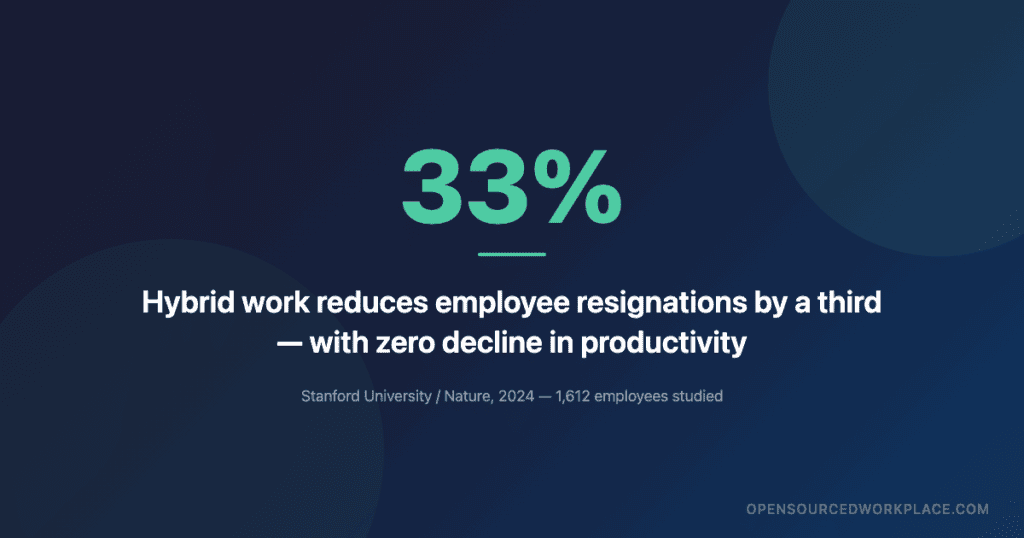
The evidence backs this up. Stanford economist Nicholas Bloom’s 2024 study found that hybrid work — when well-managed — produced zero decline in performance, while reducing resignations by a third . Gallup data shows hybrid employees are more engaged than fully in-office workers. The gains are real — but they belong to organizations that treated the hybrid transition as a leadership challenge, not a logistics problem.
What follows is a deep-dive into what that looks like in practice: the models, the research, the cultural dynamics, the AI integration challenge, and the specific things leaders need to start doing — and stop doing — to make hybrid work perform.
The Old Rules of Productivity No Longer Apply
Why the 9-to-5 Office Model Was Never as Productive as We Thought
For the better part of a century, the conventional wisdom was straightforward: show up at nine, leave at five, and productivity would follow. It was a tidy equation. It was also largely a fiction.
The traditional office model was built on the principles of industrial-era management — a time when output could be measured in units per hour and physical presence was synonymous with contribution. Knowledge work is categorically different. Yet for decades, organizations applied factory-floor logic to roles that demanded creativity, deep focus, and cognitive agility. The results were predictable: long hours masquerading as high performance, open-plan offices engineered for visibility rather than concentration, and a pervasive culture of presenteeism that rewarded attendance over actual achievement.
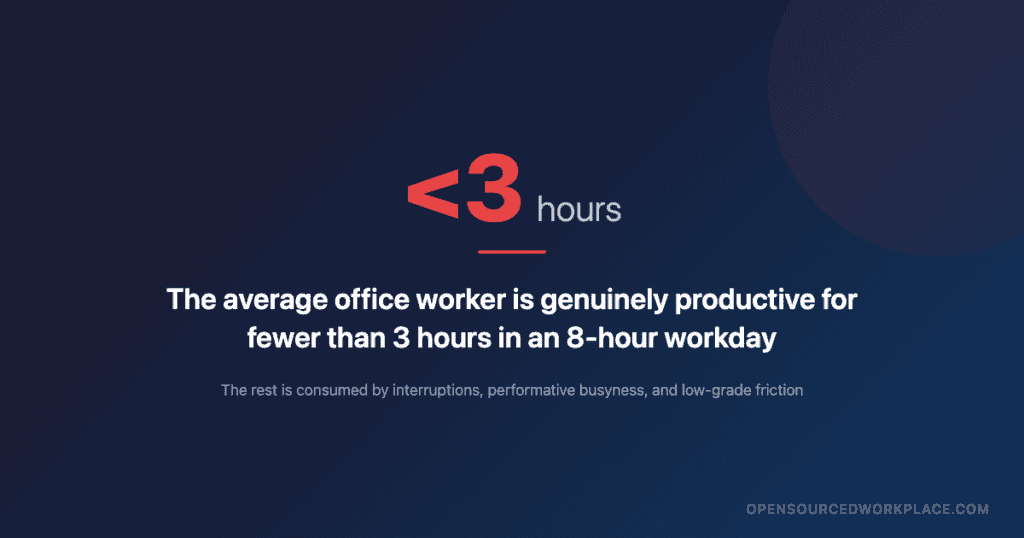
Research has consistently shown that the average office worker is genuinely productive for fewer than three hours in an eight-hour workday. The rest is consumed by interruptions, performative busyness, and the low-grade friction of navigating a shared physical environment. The commute — often an hour or more each way — extracted further cognitive and emotional tolls that were never factored into the productivity ledger. When the enforced disruption of the pandemic stripped away these assumptions and forced distributed work at scale, many organizations discovered something startling: output did not collapse. For a significant cohort of roles and workers, it improved.
The Myths Leaders Believed About In-Person Work for Decades
The mythology surrounding in-person work ran deep. Leaders believed that proximity bred collaboration, that culture required co-location, and that remote workers would inevitably succumb to distraction and disengagement. These beliefs were rarely interrogated because they were never seriously tested — until they were.
Spontaneous hallway conversations, long celebrated as the crucible of innovation, turn out to be only one narrow pathway to creative ideation. The serendipitous collision of ideas does not require physical adjacency; it requires psychological safety, the right communication infrastructure, and a culture that rewards intellectual curiosity. Many of the most transformative collaborations of the modern era have unfolded across time zones, not across office corridors.
Leaders also conflated visibility with trust. If an employee was at their desk, they were assumed to be working. If they were at home, doubt crept in. This conflation was never grounded in evidence. It was a cognitive shortcut — a heuristic inherited from an era when knowledge work was still a nascent concept. The organizations that have thrived in the hybrid era are precisely those that recognized and discarded this particular mythology early.
What the Pandemic Really Taught Us About Work
The Forced Reset That Changed Everything
The pandemic did not simply disrupt how we work. It fundamentally challenged what we had long accepted as necessary. For leaders who had spent careers in traditional office environments, the transition to remote work was not merely logistical — it was philosophical.
What emerged from those two years was not chaos, but clarity. Teams that had been weighed down by legacy processes — meetings that could have been emails, approval chains with no clear purpose, routines inherited from a previous era of work — were suddenly forced to examine everything. What actually needed to happen? What had simply always happened? The distinction mattered enormously.
Many organizations discovered that the tasks and processes they eliminated during the pandemic had never been driving performance in the first place. They had been filling time, maintaining the appearance of activity, and consuming the cognitive energy of capable people who could have been doing something far more valuable. The productivity gains that followed were not a surprise to those paying attention — they were the natural consequence of finally asking the right questions.
After two years of demonstrating that distributed work was viable at scale, the return to the office took on a different character. It became intentional rather than default. Bringing people together in person made sense not because it was the rule, but because it served a genuine purpose: the kind of personal exchange, spontaneous ideation, and human connection that a screen simply cannot replicate. The lessons of the pandemic — about clarity, purpose, and the elimination of work that does not add value — traveled with people back into their offices. And that, ultimately, is what made the hybrid model possible.
Why Goal Clarity Became Non-Negotiable
The pandemic stripped away the ambient management signals that traditional offices relied upon. Managers could no longer observe body language, overhear conversations, or gauge team energy from a quick walk through the floor. What remained — the only thing that remained — was the work itself.
This forced a discipline that many organizations had been quietly avoiding: the discipline of clear, explicit, outcome-oriented goals. Not vague objectives buried in an annual review document, but specific, shared, actionable definitions of what success looked like for every team, every function, and every individual.
In practice, this means defining goals at every level — corporate, team, function, and individual — and then returning to a simple but powerful question every single day: what am I doing today to move toward those goals? It sounds straightforward. It is not. Most organizations have become extraordinarily good at staying busy without making that connection. The pandemic, for all its disruption, forced a discipline that effective leaders have now made permanent.
What Hybrid Work Models Actually Look Like
The Different Types of Hybrid Work Models Explained Simply
The term “hybrid work” has become something of an umbrella concept — broad enough to encompass widely divergent realities. At its most fundamental, hybrid work simply means that employees divide their working time between a central office and one or more remote locations, typically home. But within that broad definition, the variance is enormous.
There are several distinct archetypes. The first is the office-first hybrid, in which in-person attendance remains the default and remote work is an occasional accommodation. The second is the remote-first hybrid, where distributed work is the norm and the office is reserved for specific high-value activities — onboarding, team summits, complex negotiations, or intensive collaborative sprints. The third, and perhaps most common, is the split-week hybrid, in which employees divide their time according to a fixed schedule — say, three days in the office and two at home. The fourth is the fully flexible or activity-based hybrid, in which workers choose their location based on the nature of the task rather than a predetermined schedule.
Each model carries distinct implications for leadership, real estate, technology investment, and culture. There is no universally correct approach. The right model depends on the nature of the work, the composition of the team, and the strategic priorities of the organization.
How Companies Are Designing Their Own Hybrid Frameworks
The most sophisticated organizations are not adopting off-the-shelf hybrid models; they are engineering bespoke frameworks calibrated to their specific operational contexts. This process typically involves a structured audit of which roles, tasks, and collaborative rituals genuinely benefit from in-person proximity — and which do not.
Some organizations have developed tiered frameworks in which roles are classified by their physical presence requirements. Frontline and operational roles may require near-full in-person attendance, while knowledge workers operate on a flexible or remote-first basis. Cross-functional teams may have defined anchor days — specific days when all members converge in the office for collaborative work — while retaining autonomy over the remainder of their schedules.
The process of designing these frameworks is itself instructive. organizations that involve employees in co-creating their hybrid models report significantly higher levels of buy-in, compliance, and satisfaction than those that impose top-down mandates. The act of collaborative design signals something important: that the organization trusts its people to be architects of their own working conditions, not merely recipients of them.
The Difference Between Flexible Hybrid and Structured Hybrid Models
The distinction between flexible and structured hybrid models is not merely semantic; it has material consequences for how teams function, how culture is maintained, and how performance is managed.
Structured hybrid models impose a defined cadence — typically expressed in terms of required in-office days per week or per month. They offer predictability and ease of coordination. Leaders know when their teams will be physically present. Real estate and facility management becomes more tractable. The risk is rigidity: a structure designed for the average employee may serve no employee particularly well, and mandated attendance can breed resentment when it feels arbitrary or disconnected from genuine business need.
Flexible hybrid models, by contrast, grant employees significant autonomy over their location choices. The benefits are substantial — heightened engagement, stronger sense of ownership, and the ability to optimize one’s environment to the task at hand. The challenges are real: coordination becomes more complex, spontaneous collaboration requires more intentionality, and the risk of inequitable outcomes — where some employees are informally advantaged by their proximity to key decision-makers — increases. Both models require active, thoughtful management. Neither works on autopilot.
The Productivity Paradox Leaders Are Facing Right Now
Why Some Teams Thrive Remotely While Others Struggle
Not every team flourishes in a hybrid or remote context, and the reasons are illuminating. Teams that thrive in distributed environments tend to share several characteristics: they have clearly defined goals and deliverables, strong pre-existing interpersonal relationships, high levels of individual self-direction, and leaders who communicate with clarity and intentionality. Teams that struggle, by contrast, often lack one or more of these foundations.
The nature of the work matters enormously. Roles that require deep individual concentration — writing, analysis, coding, research — are frequently performed better away from the distractions of an open-plan office. Roles that are heavily interdependent, require real-time iteration, or involve frequent judgment calls in ambiguous situations often benefit from physical co-location, at least periodically. The mistake many organizations make is applying a uniform policy to a heterogeneous workforce, as though all work and all workers are interchangeable.
Newly formed teams, or teams navigating significant organizational change, often need more in-person time to build the relational substrate that makes distributed collaboration possible. Trust, rapport, and shared understanding are not easily constructed through a screen. They are earned through shared experience — which can happen virtually, but typically requires more deliberate effort and more time.
The Hidden Productivity Killers Living Inside Traditional Offices
The traditional office harbors productivity threats that are rarely acknowledged because they have always been present and therefore normalized. Open-plan offices, despite their stated purpose of fostering collaboration, are well-documented concentration killers. The average knowledge worker is interrupted every four minutes, and research from the University of California Irvine suggests it takes approximately twenty-three minutes to fully restore deep focus after a significant interruption.
Unplanned meetings are another insidious drain. The culture of ad hoc scheduling — the perpetual availability implied by a shared physical space — fragments the workday into disconnected shards of time too small for meaningful deep work. The cognitive switching costs are substantial and largely invisible to the organizations that impose them.
Then there is the performative dimension of office culture: the subtle pressure to be seen to be busy, to stay late, to signal commitment through physical presence rather than actual output. This performativity is not benign. It consumes cognitive energy that could be directed toward productive work, and it creates a corrosive misalignment between what is rewarded and what actually drives organisational value.
How Hybrid Work Exposes Weak Leadership and Management Gaps
Hybrid work is, among other things, a diagnostic instrument. It surfaces leadership deficiencies that the traditional office environment was able to conceal. When a manager cannot see their team members, they must manage through clarity, communication, and trust — capabilities that were always important but were previously optional for many leaders who relied on proximity as a substitute.
The manager who micromanaged through surveillance — hovering over desks, monitoring screen activity, measuring presence as a proxy for performance — is exposed in a hybrid context. The tactics that sustained their authority in a co-located setting simply do not transfer. What remains is either genuine leadership capability or its conspicuous absence.
This is, ultimately, a good thing — though it rarely feels that way in the short term. The hybrid transition has accelerated a necessary reckoning with what leadership actually requires in a modern knowledge economy. organizations that have used this moment to invest in management capability development are reaping significant dividends. Those that have not are experiencing the consequences in the form of disengagement, attrition, and declining performance.
What the Data Says About Hybrid Work and Productivity
The Studies That Are Reshaping How We Measure Output
The body of empirical research on hybrid work and productivity has grown substantially over the past several years, and its findings are more nuanced than the headline narratives on either side of the debate suggest. Several landmark studies have challenged the binary framing of “remote versus office” and pointed toward a more sophisticated understanding of how, when, and for whom distributed work is most effective.
Stanford economist Nicholas Bloom’s landmark randomized controlled trial, published in Nature in June 2024, studied 1,612 employees at Trip.com and found that hybrid work — two days at home per week — had zero negative effect on productivity, performance reviews, or promotion rates, while simultaneously reducing resignation rates by a third. The critical variables are the design of the model, the quality of management, and the degree of intentionality with which organizations approach the hybrid transition.
Equally significant is emerging research on the relationship between autonomy and productivity.Studies consistently demonstrate that when employees have meaningful control over where and how they work, their intrinsic motivation and discretionary effort increase. This is not a trivial finding. Discretionary effort — the difference between doing the minimum required and doing one’s best work — is precisely the kind of contribution that drives organisational performance in a knowledge economy.
Why Hours Worked Is the Wrong Metric for Hybrid Teams
The persistence of hours-worked as a productivity metric in the hybrid era is one of the most consequential conceptual errors in contemporary management. It is a relic of the industrial model, smuggled into the knowledge economy without scrutiny. Hours worked measures input, not output. It conflates activity with achievement. And in a distributed context, it is nearly impossible to measure accurately without resorting to the kind of surveillance technology that corrodes trust and signals profound managerial dysfunction.
The organizations that are genuinely thriving in the hybrid era have made a decisive shift toward outcome-based measurement. They define success in terms of deliverables produced, objectives achieved, and value created — not time clocked. This shift is not simply a matter of measurement methodology. It represents a fundamentally different set of assumptions about the nature of professional work and the basis of the employment relationship.
Managers who resist this shift often reveal something important about their underlying beliefs. If a leader insists on measuring hours rather than outcomes, it suggests they do not fully trust their employees to perform without surveillance — a belief that, when employees sense it, tends to become self-fulfilling.
Surprising Statistics That Challenge Everything Leaders Assumed
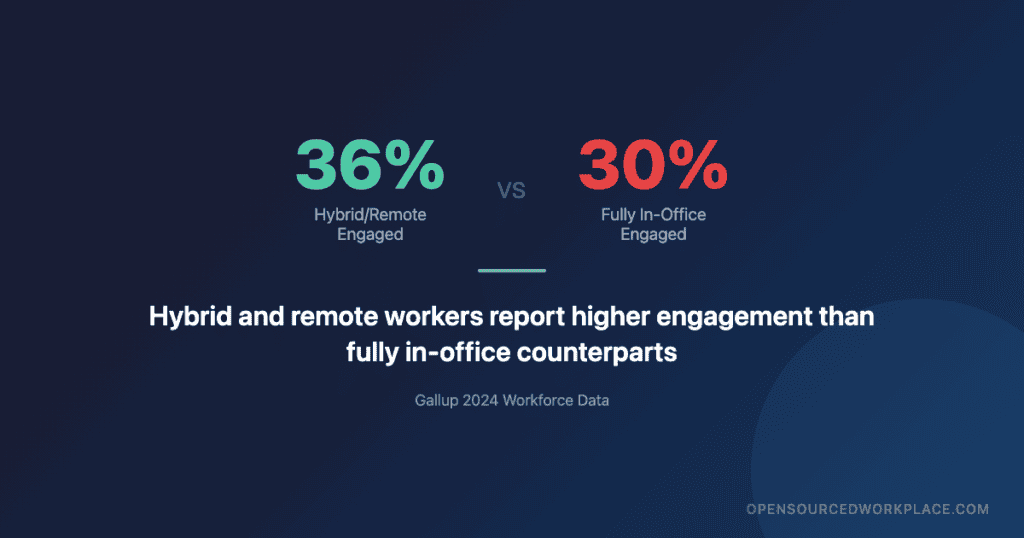
The data continues to confound the intuitions of leaders who built their careers in a traditional office paradigm. Gallup’s 2024 workforce data shows that hybrid and remote workers report higher engagement levels than their fully in-office counterparts — with 36–37% of remote and hybrid employees engaged versus just 30% of on-site workers — a finding that directly contradicts the assumption that physical presence is necessary for organisational commitment.
According to Nicholas Bloom’s IMF analysis, hybrid work is worth approximately an 8 percent increase in salary to the average employee — primarily because of the hours saved from commuting. The retention benefits are equally striking. Replacing a single knowledge worker costs between 50% and 200% of their annual salary, which means the one-third reduction in resignation rates documented in the Trip.com study represents a financially significant return on hybrid investment alone.
The data on collaboration is equally counterintuitive. While in-person collaboration scores higher for certain types of interaction — particularly the formation of new relationships and the resolution of complex interpersonal conflict — virtual and asynchronous collaboration can be more inclusive, more equitable, and more productive for well-defined creative and analytical tasks. The conclusion is not that one mode is superior, but that the most effective organizations deploy both modalities with intention.
How Hybrid Work Models Are Transforming Team Collaboration
The New Rules of Communication in a Hybrid Workplace
Communication in a hybrid environment operates by a different set of rules than communication in a traditional office — and organizations that attempt to apply the old rules to the new context do so at their peril. The most fundamental shift is from ambient communication to intentional communication.
In a co-located setting, a great deal of information travels through informal channels: the overheard conversation, the body language observed in a meeting, the casual question posed in passing. In a hybrid environment, these ambient channels are attenuated or eliminated. Information that was once transmitted implicitly must now be transmitted explicitly. This is more effortful, but it carries a hidden benefit: explicit communication is more equitable, more accessible, and more durable. Information that is written down or recorded can be retrieved, referenced, and shared in ways that ambient communication never could be.
The new rules of hybrid communication include: defaulting to asynchronous channels for non-urgent information exchange; making decisions visible and documented rather than arrived at informally and communicated verbally; designing meetings with ruthless intentionality — every meeting should have a clear purpose, a defined agenda, and an unambiguous deliverable; and creating deliberate opportunities for the informal, relational communication that sustains team cohesion.
Why Asynchronous Work Is Becoming the Productivity Power Tool
Asynchronous work — the practice of completing tasks and communicating without requiring real-time participation from colleagues — is perhaps the most underappreciated productivity lever in the hybrid toolkit. For organizations operating across multiple time zones, it is not merely convenient but essential. But even within a single time zone, the asynchronous default carries significant advantages.
Asynchronous communication allows individuals to engage with information at their peak cognitive moment rather than at the moment dictated by a meeting invitation. It creates a written record that can be referenced and built upon. It is inherently more inclusive — giving introverts, non-native language speakers, and those with caregiving responsibilities a more equitable opportunity to contribute. And it reduces the meeting load that consumes so much of the modern knowledge worker’s day.
The shift to asynchronous-first requires cultural recalibration. organizations accustomed to real-time responsiveness must develop norms around acceptable response windows, the appropriate use of different communication channels, and the distinction between urgent and non-urgent information. This is not a trivial undertaking — but the organizations that have made this transition report dramatic improvements in focused work time, employee autonomy, and overall productivity.
Tools and Platforms That Are Making Hybrid Collaboration Seamless
The technology infrastructure underpinning hybrid work has matured considerably. The early days of pandemic-enforced remote work exposed significant gaps — in video conferencing quality, in document collaboration, in project visibility, in the social fabric of digital work. Many of those gaps have been substantially addressed.
Modern hybrid teams rely on a layered technology stack: a video conferencing platform for synchronous interaction; a persistent messaging tool for real-time and near-real-time communication; a project management system for tracking work, accountability, and progress; a shared document environment for collaborative creation and knowledge management; and increasingly, AI-powered tools that automate routine tasks, surface relevant information, and reduce the cognitive overhead of distributed coordination.
The best tools are those that reduce friction rather than add it — that make the right information available to the right person at the right moment, regardless of their location. The worst are those that multiply communication channels without purpose, creating notification fatigue and information overload that erode the very productivity they claim to support.
The Role of Trust in Hybrid Productivity
Why Micromanagement Destroys Hybrid Team Performance
Micromanagement is corrosive in any environment. In a hybrid environment, it is lethal. The impulse to monitor, control, and surveil distributed workers is understandable — it arises from the same anxiety about visibility that has always driven micromanagerial behavior. But in a hybrid context, the mechanisms available to act on that impulse are both more intrusive and more damaging.
Productivity monitoring software — screen capture tools, keystroke loggers, activity trackers — has proliferated in the wake of the remote work transition. The research on its effects is unambiguous: it reduces job satisfaction, increases stress, damages trust, and ultimately depresses the intrinsic motivation that drives genuine high performance. Employees who know they are being surveilled do not become more productive; they become more skilled at appearing productive — a distinction that carries severe organisational costs.
The micromanager’s fundamental error is treating performance as a function of observable activity rather than of outcomes. In a knowledge economy, this is not merely inefficient — it is actively counterproductive. The knowledge worker’s most valuable contributions — the creative insight, the strategic connection, the elegant solution — are invisible to a screen monitor. They cannot be captured in an activity log. They emerge from conditions of autonomy, psychological safety, and intrinsic engagement that micromanagement systematically destroys.
How Leaders Who Trust Their Teams Are Winning the Productivity Race
The evidence is accumulating with remarkable consistency: leaders who extend genuine trust to their hybrid teams are outperforming those who do not, across virtually every meaningful dimension. Their teams report higher engagement, deliver better outcomes, exhibit lower attrition, and demonstrate greater resilience in the face of organisational challenge.
Research consistently links autonomous forms of motivation — the kind that emerges when employees have genuine choice in how and where they work — to higher job performance, satisfaction, and engagement. Trust, in this context, is not naïve. It is not the absence of accountability. It is the decision to hold people accountable for outcomes rather than for activity — to say, in effect, “I will judge your contribution by what you produce, not by when you produce it or where.” This form of trust is both more respectful and more demanding than its surveillant alternative.
The leaders who have most successfully made this transition share a common characteristic: they have fundamentally reoriented their management practice around enabling rather than controlling. They ask “How can I remove the obstacles to your best work?” rather than “Are you working hard enough?” This is not a soft question. It is one of the most strategically important questions a leader can ask.
Building Accountability Without Surveillance in a Hybrid Environment
Accountability and surveillance are frequently conflated — but they are not the same thing, and conflating them is one of the most damaging conceptual errors in hybrid management. Surveillance monitors behavior. Accountability measures outcomes. The first treats employees as potential shirkers who must be watched. The second treats them as responsible professionals who can be trusted to deliver.
Building genuine accountability in a hybrid environment requires four things: clarity of expectations, transparency of progress, regularity of feedback, and consequences — both positive and negative — that are meaningful and applied consistently. When these four elements are in place, surveillance becomes redundant. Employees know what they are expected to achieve, can see how their contributions are tracked, receive timely feedback, and understand that their performance will be recognized or addressed.
The organizations that have mastered this are characterized by a remarkable degree of operational clarity. Every team member can articulate their key priorities, the metrics by which their performance will be assessed, and the timeframes within which their deliverables are expected. This clarity — which is harder to achieve than it sounds — is the foundation upon which genuine hybrid accountability rests.
What High Performing Hybrid Teams Do Differently
The Daily Habits of Employees Who Excel in Hybrid Settings
High performers in hybrid environments are not merely talented — they are deliberately structured. They have developed rituals and routines that create the conditions for sustained high performance regardless of their working location. These habits are learnable and teachable, which has significant implications for how organizations approach professional development.
The most effective hybrid workers typically begin each working day by defining their three most important priorities — the specific outcomes they intend to produce that day, rather than the tasks they intend to perform. This deceptively simple practice creates a cognitive anchor that helps navigate the distractions and interruptions that hybrid work can generate. They protect blocks of uninterrupted time for deep work — the cognitively demanding tasks that generate the most value and require sustained concentration. They communicate proactively and with precision, providing colleagues and managers with regular, unsolicited visibility into their progress and priorities. And they maintain clear boundaries between work and non-work, recognizing that the absence of physical separation between professional and personal space creates a constant risk of boundary erosion.
How the Best Hybrid Teams Structure Their Weeks for Maximum Output
High-performing hybrid teams do not leave their weekly structure to chance. They engineer it with the same intentionality they bring to their work products. A well-structured hybrid week typically includes designated in-office days anchored around high-value collaborative activities — strategic planning, creative ideation, relationship-building, and complex problem-solving. Remote days are protected for deep individual work and asynchronous collaboration. Meeting load is deliberately managed: meetings are batched where possible to preserve contiguous blocks of focused time, and each meeting is evaluated against a clear purpose and an explicit justification for synchronous rather than asynchronous engagement.
The best teams also build deliberate rhythms of connection that transcend the transactional. Regular team rituals — brief social check-ins, collaborative retrospectives, shared celebrations of progress — maintain the relational fabric that sustains performance over the long term. These rituals are not luxuries. They are infrastructure. Teams that neglect them find themselves facing the compounding costs of eroded trust, diminished cohesion, and declining psychological safety.
Why Clarity of Expectations Is the Secret Weapon of Hybrid Success
If there is a single variable that most consistently distinguishes high-performing hybrid teams from their struggling counterparts, it is clarity. Clarity of role, clarity of priority, clarity of deliverable, clarity of communication norm, clarity of decision-making authority. The list extends, but the principle is consistent: in a distributed environment, ambiguity is not merely uncomfortable — it is operationally dangerous.
When team members are co-located, a great deal of ambiguity resolves itself through informal interaction. The question asked in passing, the nuance conveyed through tone, the implicit understanding built through repeated shared experience — these ambient clarity-generators are attenuated in a hybrid context. What replaces them must be explicit, documented, and regularly reinforced.
Leaders who invest in creating this clarity — through written team charters, explicit decision frameworks, clearly documented processes, and regular realignment conversations — are investing in one of the highest-return activities available to them in the hybrid era. The upfront cost in time and effort pays compound dividends in reduced friction, faster execution, and higher-quality outcomes.
The Impact of Hybrid Work on Employee Wellbeing and Output
How Flexibility Is Directly Linked to Higher Productivity Levels
The relationship between flexibility and productivity is not intuitive to everyone, but the evidence is robust. Flexibility — the ability to exercise meaningful control over when, where, and how one works — is one of the most powerful drivers of intrinsic motivation available to employers. And intrinsic motivation is the engine of genuine high performance.
The mechanism is well-understood in the psychological literature.Self-determination theory, consistently validated in workplace research, demonstrates that when people experience autonomy over their work, their sense of ownership and personal investment increases — and this autonomy-productivity link holds robustly across industries and organisational contexts. Conversely, when autonomy is withdrawn — when people are required to work in ways that feel arbitrary or infantilising — engagement and initiative decline in predictable ways.
Flexibility also enables employees to work at their cognitive peak. Some individuals think most clearly in the early morning; others reach peak performance in the late afternoon. Some require silence for deep work; others need ambient stimulation. The rigid uniformity of the traditional office ignored these differences entirely. Hybrid flexibility allows individuals to align their working conditions with their cognitive rhythms — a simple but powerful optimization with significant productivity implications.
The Burnout Risk Leaders Often Miss in Hybrid Work Environments
For all its benefits, hybrid work carries a burnout risk that is frequently underestimated by organizations in the early flush of successful transition. The very flexibility that drives engagement can, without deliberate management, become a vector for overwork and boundary erosion.
When the office is everywhere and work is always accessible, the psychological switching cost between professional and personal modes increases significantly. The commute — often lamented as a waste of time — served an important decompression function for many workers. Its absence, in a home-working context, removes a natural boundary that many people only recognize in retrospect.
Research tracking hybrid workers found that digital fatigue — including difficulties in disconnecting and low motivation during prolonged screen time — is among the most widespread symptoms reported in hybrid settings, even when overall job satisfaction remains high. Sustained overwork corrodes cognitive performance, undermines wellbeing, and ultimately drives the attrition that hybrid flexibility was meant to prevent. Leaders who do not actively monitor for these signals and intervene when they detect them are allowing a slow accumulation of human and organisational damage that will eventually manifest in ways that are far more costly to address.
Why Work Life Integration Is Replacing Work Life Balance
The concept of work-life balance — the idea that professional and personal life exist on opposite ends of a scale that must be kept in equilibrium — was always a somewhat artificial construct. In the hybrid era, it has become largely untenable as a practical aspiration. The boundaries between work and life are more permeable than they have ever been, and the task of maintaining a strict separation between them requires an effort that many find neither sustainable nor desirable.
Work-life integration is the emerging paradigm: the idea that professional and personal life can coexist and, when managed well, mutually reinforce one another. The parent who takes a mid-afternoon break to attend a school recital and returns to work in the evening is not failing to maintain work-life balance — they are exercising the kind of intelligent integration that hybrid flexibility makes possible. The employee who interrupts a focused work block to take a walk — and returns to their desk with renewed energy and perspective — is not slacking. They are practising the cognitive management that sustains high performance over the long term.
The organisational implications are significant. Leaders who design hybrid policies around integration rather than separation — who measure performance by outcomes and trust employees to manage their time intelligently — create the conditions in which this integration can flourish. Those who attempt to enforce strict temporal boundaries in a hybrid context create unnecessary friction and signal a fundamental distrust of their workforce.
Office Design Is Changing to Match the Hybrid Reality
Why Most Offices Are Being Rebuilt Around Collaboration Not Desks
The mathematics of hybrid work have rendered the traditional office layout functionally obsolete. When a significant proportion of the workforce is not in the office on any given day — a reality for most hybrid organizations — a sea of assigned desks represents an enormous waste of real estate. But the transformation of office design runs deeper than mere spatial efficiency.
The premise of the traditional office was individual work performed in a shared location. The premise of the hybrid-era office is fundamentally different: it is a destination for activities that benefit from physical co-presence — collaboration, mentorship, informal social connection, and the specific kinds of creative and strategic work that are genuinely enhanced by proximity. This change in premise requires a complete rethinking of spatial design.
The office of 2026 is characterized by an abundance of collaborative infrastructure — versatile meeting rooms, informal gathering spaces, project zones designed for team-based work — and a relative scarcity of individual workstations. It is a destination rather than a default. And because it must compete with the comfort and convenience of home working, it has to offer something that home working cannot: the energy, serendipity, and relational richness of shared physical presence, provided in an environment specifically designed to facilitate it.
The Rise of Hot Desking and What It Means for Team Culture
Hot desking — the practice of using unassigned, shared workstations rather than dedicated individual desks — has become a defining feature of the hybrid office. Its adoption has accelerated dramatically, and its implications for team culture deserve careful consideration.
The case for hot desking is primarily economic: it dramatically reduces the real estate footprint required to support a hybrid workforce. But its cultural consequences are more complex. For employees who valued their personalised workspace as a source of psychological ownership and organisational identity, the shift to hot desking can feel disorienting. The loss of a fixed desk is experienced by some as a loss of belonging.
organizations that have navigated this transition most successfully are those that have compensated for the loss of individual spatial ownership with a richer investment in team and organisational identity — through thoughtful branding of shared spaces, team zones that provide a sense of collective territory, and a deliberate culture of hospitality in the physical environment. Hot desking works best when the office is genuinely worth going to — when it offers an experience that motivates people to make the trip.
How Physical Spaces Now Have to Earn Their Place in the Workday
Perhaps the most profound shift in the relationship between office and workforce is this: in the hybrid era, the office must earn its place in the employee’s workday. This is an inversion of the traditional paradigm, in which attendance was compulsory and the office’s value was assumed rather than demonstrated.
When employees have a genuine choice about where to work, they will exercise that choice rationally. If the office offers a better environment for the work they need to do that day — better tools, better collaboration infrastructure, stronger social energy — they will come. If it offers a worse environment — longer commute, more interruptions, less comfortable workstations — they will not. This dynamic creates a powerful market mechanism that is forcing organizations to invest in their physical environments with an intentionality they previously lacked.
The most forward-thinking organizations are treating their offices as products — designed with the user experience at the center, continuously iterated based on feedback, and evaluated against clear metrics of utilisation and satisfaction. This represents a significant maturation in the relationship between organizations and their physical infrastructure.
Technology as the Backbone of Hybrid Productivity
The Tech Stack Every Hybrid Team Needs to Function at Full Speed
Technology is the connective tissue of the hybrid organization — the infrastructure that enables distributed teams to function with the coherence and efficiency of co-located ones. But not all technology investments are created equal, and the proliferation of tools without strategic intent is itself a productivity hazard.
An effective hybrid tech stack typically includes five layers. First, a synchronous communication platform that supports high-quality video conferencing and real-time messaging. Second, an asynchronous communication layer — typically a persistent messaging tool supplemented by a robust email culture — that supports non-urgent information exchange across time zones and working patterns. Third, a project and work management system that provides visibility into priorities, progress, and accountability across the team. Fourth, a collaborative document and knowledge management environment that enables shared creation and institutional memory. And fifth, an integration layer that connects these tools and reduces the friction of switching between them.
The most effective implementations are those in which tool selection and usage norms are established collaboratively, with clear guidance on which channel is appropriate for which type of communication and a shared commitment to the practices that make each tool effective.
Why Outdated Tools Are the Biggest Barrier to Hybrid Success
The organizations that are struggling most with hybrid productivity are frequently those that attempted to distribute their workforces without making the corresponding investment in technology modernisation. They installed video conferencing software and declared their digital transformation complete. They are discovering that this is insufficient.
Outdated tools create disproportionate friction in a distributed context. A clunky document management system that was merely inconvenient in an office environment becomes a genuine obstacle when team members are working across different locations and time zones. A communication platform with poor notification management generates the kind of incessant interruption that is even more damaging in a home environment than in an office. Knowledge workers already spend over 59 minutes per day searching for information across cloud storage systems and message channels — a number that climbs further when tools are fragmented and poorly integrated.
The investment required to modernize the technology infrastructure of a hybrid organization is real, but it is routinely underestimated relative to the productivity gains it enables. organizations that have made this investment systematically — approaching it as a strategic capability-building exercise rather than a cost to be minimized — are reaping returns that far exceed the initial outlay.
How AI Is Quietly Supercharging Hybrid Workforce Productivity
Artificial intelligence is reshaping the productivity landscape of hybrid organizations in ways that are still not fully appreciated. The most visible applications — AI-generated meeting summaries, intelligent scheduling assistants, automated workflow tools — are only the leading edge of a much deeper transformation.
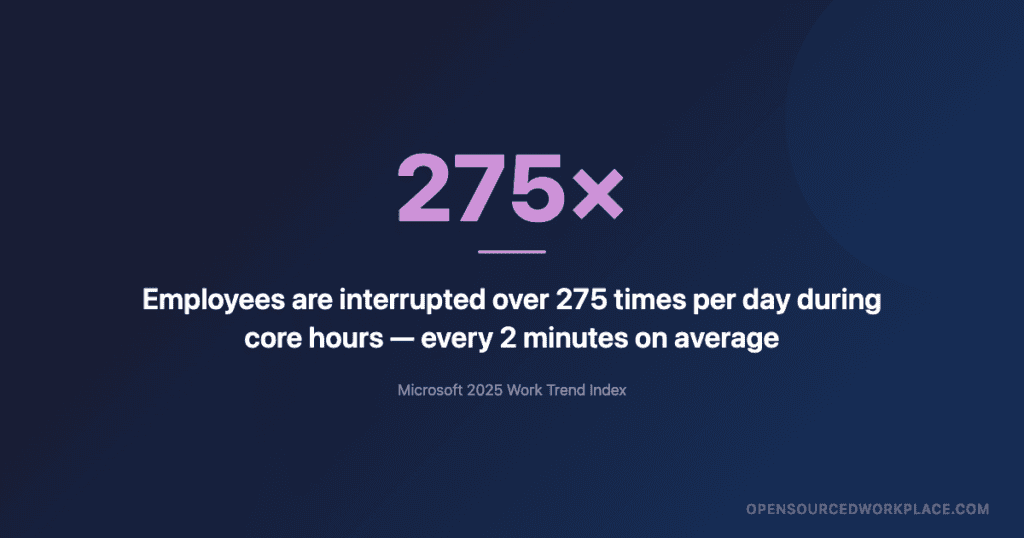
AI tools are increasingly capable of handling the coordination and information synthesis tasks that consumed enormous amounts of knowledge worker time in the pre-AI era: summarizing lengthy email threads, extracting key action items from meeting recordings, generating first drafts of routine documents, surfacing relevant information from large knowledge bases, and automating the low-value administrative work that surrounded higher-value cognitive tasks. Microsoft’s 2025 Work Trend Index found that employees are interrupted every two minutes on average during core hours — over 275 times a day — and that AI is emerging as the primary mechanism through which organizations are breaking that cycle. The cumulative time savings are significant — and in a hybrid context, where coordination overhead is structurally higher than in a co-located setting, the productivity multiplier is particularly pronounced.
The organizations that are most effectively deploying AI in their hybrid contexts share a common approach: they are systematic rather than ad hoc, investing in the prompting literacy and workflow integration skills that enable their teams to use AI tools effectively, rather than simply deploying them and hoping for adoption.
The Leadership Challenge Nobody Is Talking About: AI, Hybrid Work, and the Expectation Gap
Why Your Employees Are Living in Two Different AI Worlds
There is a tension building inside organizations that most leaders have not yet named, let alone addressed. On one side, employees are experiencing the full power of consumer AI in their personal lives — tools that can write, analyze, create, and automate with remarkable speed and sophistication. On the other side, they arrive at work and find themselves operating with tools that are slower, more constrained, and far more restricted.
This is not a technology failure. It is an inevitable consequence of the legitimate security and governance obligations that corporate environments must honor. Large organizations are rightly cautious about the data risks, liability exposure, and compliance implications of unrestricted AI deployment. The security concerns are real, and the responsibility to address them is genuine.
But the gap it creates is significant. When an employee can accomplish something in minutes at home using a consumer AI tool, and the same task takes hours in a corporate environment where those tools are unavailable or restricted, the frustration compounds. The expectation gap — the distance between what people know AI can do and what their employer will allow — is going to be one of the defining leadership challenges of the next several years.
The Control and Accountability Question Every Leader Must Answer
As AI becomes embedded in hybrid workflows, a new and urgent question emerges for leadership: who is responsible for what AI produces? If a team member uses an AI tool to draft a report, generate an analysis, or synthesise data, the question of ownership and accountability is not merely philosophical — it is operational, legal, and cultural.
This is the question that thoughtful leaders are wrestling with right now. And honest leadership requires admitting that there are no clean answers yet. The organizations that are navigating this most effectively are not those that have solved the problem — they are those that have created the space to explore it deliberately, rather than leaving it to chance or individual improvisation.
The most pragmatic approach emerging across sectors is the sandbox model: a designated group of employees given explicit permission and support to explore AI tools in a controlled environment, with the findings then used to inform broader policy. This staged approach — explore, evaluate, integrate — mirrors the iterative logic of sound governance. It allows organizations to move forward without moving recklessly.
Many organizations are currently operating what amounts to two parallel production environments: one with AI-enabled workflows, one without, slowly integrating the two as confidence in performance and security grows. It is not elegant. But it is honest. And it is far better than the alternative — either prohibiting AI use entirely and watching talent walk out the door, or deploying it without governance and discovering the consequences when it matters most.
Why AI and Hybrid Work Are Natural Partners
Here is something that is easy to miss in the noise of the AI debate: AI and hybrid work are natural partners. Not because both are modern and vaguely technological, but because they share a foundational requirement. Both demand the same thing of the organizations and individuals who use them well: clarity of purpose.
To use AI effectively, you need to know what you are trying to achieve. You need to be able to articulate your goal clearly enough to direct the tool toward it. The same is true of hybrid work at its best. The discipline of defining goals at every level — corporate, team, function, individual — and then asking every day what concrete actions connect today’s work to those goals: that is the discipline that makes both AI and hybrid work perform.
Think about how AI actually works. You start with the outcome in mind. You work backwards. You define the steps. That process is identical to the goal-setting discipline that makes hybrid teams function. Which means that organizations that have already done the work of becoming genuinely goal-oriented — that have moved past vague objectives toward specific, measurable, time-bound outcomes — are better positioned to extract value from AI than those that have not. The pandemic forced that discipline. Hybrid work sustained it. AI is now rewarding it.
Managing Performance in a Hybrid World
Why Traditional Performance Reviews Fail Hybrid Employees
The traditional annual performance review was always a blunt instrument. In a hybrid context, it becomes genuinely dysfunctional. Designed for an era of continuous in-person observation, it assumes a form of managerial visibility that simply does not exist in a distributed environment. The result is performance assessment that is either based on incomplete information, or distorted by proximity bias — the tendency to evaluate more positively those employees who were most physically visible.
A 2025 study found that even when managers knew a full-time remote employee performed just as well as an on-site colleague, they were still less likely to recommend them for promotion or a raise — a pattern that researchers describe as driven not by performance data but by outdated assumptions about dedication and commitment. The case for replacing annual reviews — or at minimum, fundamentally reforming them — is compelling.
The most progressive hybrid organizations have moved toward continuous performance conversations: regular, informal check-ins focused on priorities, progress, and obstacles, supplemented by more structured quarterly conversations and annual strategic reviews. This cadence provides more timely feedback, enables faster course correction, and creates a more accurate and equitable basis for performance assessment.
How to Set Goals That Work Across Remote and In-Person Settings
Effective goal-setting in a hybrid environment requires a degree of precision that is genuinely more demanding than in a traditional office context. When the informal correction mechanisms of co-location are absent — the overheard concern, the hallway check-in, the body language that signals misalignment — written goals must carry more of the load.
The most effective goal frameworks for hybrid teams share several characteristics. They are outcome-oriented: defined in terms of what needs to be achieved rather than what needs to be done. They are measurable: specified with enough precision that both the goal-holder and their manager can agree on whether the goal has been met. They are time-bounded: accompanied by clear milestones that create accountability checkpoints before the final deadline. And they are contextualised: connected explicitly to the team and organisational priorities they serve, so that every individual understands how their contribution fits into the larger picture.
Goals set with this level of intentionality function as coordination instruments as well as performance tools — giving distributed teams a shared map of priorities and progress that reduces the need for constant synchronous check-ins.
The Shift From Activity Based to Outcome Based Leadership
The shift from activity-based to outcome-based leadership is the defining management transition of the hybrid era. It is simple to describe and challenging to execute. Activity-based management asks: “What are you doing?” Outcome-based leadership asks: “What are you achieving?” The first is compatible with surveillance. The second requires trust.
The leaders who have made this shift most successfully are those who have done the difficult work of clarifying what success looks like for every role and every initiative they oversee. This clarity is the precondition for outcome-based accountability. Without it, the shift to outcome-based leadership can feel like the abandonment of accountability altogether — which is precisely the fear that holds many managers in the grip of activity-based thinking.
The organisational systems must reinforce this shift. Promotion decisions, compensation structures, and recognition practices must be visibly aligned with outcomes rather than with observable effort. When the reward system continues to favor those who are most visibly active, outcome-based rhetoric will always be undermined by the implicit messages that the system actually sends.
Inclusion and Equity Challenges in Hybrid Work Models
Why Proximity Bias Is the Silent Threat to Hybrid Team Fairness
Proximity bias — the tendency for leaders and colleagues to attribute greater value, capability, and commitment to those who are most physically present — is one of the most consequential and least-discussed risks of hybrid work. It operates largely below conscious awareness, drawing on deeply embedded cognitive heuristics about visibility and worth that were calibrated for a world in which all meaningful work happened in a shared physical space.
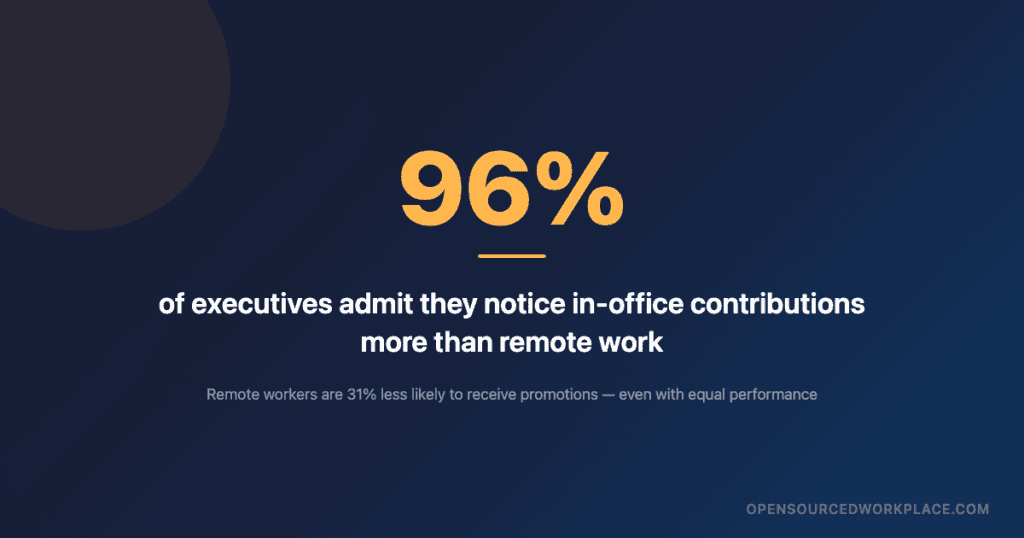
The practical consequences are serious. A staggering 96% of executives admit they notice in-office contributions more than remote work, and remote workers are 31% less likely to receive promotions than their in-office counterparts, even when their objective output is equivalent or superior. Research involving nearly 1,000 UK managers found that the career penalty for remote workers is almost entirely driven by the belief that they are simply less committed — a perception that evaporates entirely when managers are given objective performance data. Over time, these micro-inequities compound into substantial career disadvantages.
Addressing proximity bias requires more than awareness — it requires the active redesign of the processes and norms through which performance is evaluated, opportunities are allocated, and information is shared. Leaders must deliberately seek out and amplify the contributions of remote team members. Promotion criteria must be made explicit and applied consistently. Information must flow through channels accessible to all team members, not just those who happen to be in the building.
How Leaders Can Ensure Remote Employees Are Never Left Behind
Ensuring equity for remote employees is an active leadership responsibility, not a passive aspiration. It requires sustained attention, deliberate process design, and a willingness to challenge the default assumptions that favor proximity.
Practically, this means ensuring that all meetings are conducted as though fully remote — with every participant joining individually via video, regardless of whether some are co-located — so that the experience is equivalent for all. It means documenting decisions and sharing them through channels accessible to everyone. Surveys from SHRM reveal that two-thirds of supervisors admit treating remote employees differently than their in-office counterparts — a gap that explicit policy and regular audit can address. And it means explicitly including remote employees in informal communication and social rituals, and regularly checking the data on promotion rates and assignment allocation to identify and correct patterns of inequity before they become entrenched.
The organizations that have done this most effectively treat equity not as a compliance obligation but as a strategic imperative — recognizing that a hybrid model that systematically disadvantages remote workers will, over time, push the most talented and mobile employees toward organizations that offer a more equitable experience.
Building a Culture Where Location Does Not Limit Opportunity
The aspiration of a location-agnostic meritocracy — a culture in which one’s physical location has no bearing on one’s opportunity to contribute, develop, and advance — is challenging to realize but not impossible. The organizations that are closest to achieving it share a set of common cultural characteristics.
They are radically transparent about opportunities, expectations, and decisions. They apply consistent standards regardless of employee location. They invest in the communication infrastructure that ensures remote employees are never peripheral to the information flows that shape organisational life. And they hold leaders explicitly accountable for the equity of their people decisions — making proximity bias visible and consequential rather than invisible and costless.
The cultural shift required is significant. It demands that leaders examine and often discard intuitions about presence and performance that were formed over decades of office-based work. But the organizations that make this shift are building a more diverse, more resilient, and ultimately more capable workforce than those that allow proximity to become a structural advantage.
How Hybrid Work Is Reshaping Company Culture
Why Culture Can No Longer Depend on Physical Presence Alone
For decades, organisational culture was understood primarily as a physical phenomenon — the product of shared space, shared rituals, and the accumulated texture of daily co-presence. The hybrid era has not destroyed this understanding, but it has made it insufficient. A culture that exists only when people are in the same room is not robust enough to sustain a modern hybrid organization.
The most resilient hybrid cultures are those that have been made explicit — articulated in language, embodied in processes, and reinforced through practices that function regardless of where employees are working. These cultures do not rely on osmosis. They are engineered with intention, communicated consistently, and actively maintained by leaders who understand that culture in a hybrid environment is not ambient but deliberate.
This does not mean that physical presence is irrelevant to culture. In-person time, when it occurs, carries a particular potency that digital interaction cannot fully replicate. The question is not whether physical presence contributes to culture — it does, significantly — but whether culture can be designed to survive and thrive in its absence. The answer, for organizations willing to do the work, is yes.
The Intentional Rituals High Trust Hybrid Companies Are Building
High-trust hybrid organizations are characterized by a deliberate architecture of rituals — recurring practices that create shared experience, reinforce cultural values, and sustain the relational fabric of distributed teams. These rituals take many forms, but they share a common purpose: to create the moments of genuine human connection that nourish organisational culture across distance.
Some are synchronous and in-person: quarterly team summits that combine strategic alignment with social bonding; annual company gatherings that serve as cultural anchor events; leadership offsites that create the shared context from which strategic decisions flow. Others are virtual: weekly team check-ins that begin with personal sharing before moving to business; virtual social events that provide the informal connection of an office kitchen; digital recognition platforms that make appreciation visible and collective.
The most effective of these rituals are those that feel genuinely valuable to participants rather than performatively mandatory — rituals that earn their place in the workweek because they provide something that people actually want, not simply because a well-intentioned HR team has scheduled them.
How Leaders Are Keeping Teams Connected Across Distances
Connection in a hybrid team does not happen spontaneously. It must be cultivated with the same intentionality that leaders bring to their strategic priorities. The leaders who are most successful at this treat connection as an operational imperative, not a soft cultural nicety.
They invest time in understanding each team member as a whole person — their working style, their personal context, their aspirations and anxieties. They create structured opportunities for team members to know and understand one another, recognizing that the relational trust that makes collaboration effective is built through repeated meaningful interaction, not through proximity alone. They communicate with consistency and authenticity — sharing not just information but perspective, emotion, and personal investment in a way that models the vulnerability required for genuine connection.
They also pay close attention to the health of the team’s relational fabric over time, watching for the early signs of disconnection or disengagement and intervening with care before they compound. In a hybrid environment, these signals are often more subtle than in a co-located setting, and the consequences of missing them are correspondingly greater.
What Managers Need to Unlearn to Lead Hybrid Teams Well
The Old Management Behaviors That Actively Harm Hybrid Productivity
The transition to hybrid leadership requires not just the acquisition of new skills but the deliberate unlearning of old ones. Several management behaviors that were tolerated or even rewarded in a traditional office context become actively harmful in a hybrid environment.
The first is managing by presence — the habit of using physical visibility as a proxy for performance. In a hybrid context, this behavior systematically disadvantages remote workers and rewards those who are in the office most frequently, regardless of their actual contribution. Research shows that 42% of supervisors sometimes forget about remote workers when assigning tasks, and 27% of executives still rely on visibility metrics like desk time to evaluate productivity — habits that are both inequitable and operationally costly. The second is information hoarding — the practice of sharing information informally with co-located colleagues while failing to ensure that remote team members have equivalent access. The third is the reflexive default to synchronous communication: calling a meeting when an email would suffice, or convening a real-time discussion when an asynchronous thread would produce better results with less disruption.
The fourth, and perhaps most damaging, is the failure to communicate with sufficient intentionality. In a co-located setting, a great deal of managerial communication happens informally and incidentally. In a hybrid environment, the absence of these informal moments creates information vacuums that employees fill with speculation — often in ways that are less accurate and more anxiety-provoking than the reality they obscure.
Why Empathy Is Now a Core Leadership Competency Not a Nice to Have
Empathy — the capacity to understand and share the experiences of others — has long been acknowledged as a valuable leadership quality. In the hybrid era, it has become a core competency without which effective leadership is simply not possible. The reason is structural: hybrid work surfaces the full diversity of human circumstance in a way that the traditional office, with its implicit expectation of homogeneity, never did.
The employee working from a crowded apartment with children at home, the remote worker dealing with isolation and loneliness, the in-office employee anxious about commuting costs — these experiences are not peripheral concerns. They are the lived realities that shape how people show up to work, how much discretionary effort they can bring to bear, and how sustainably they can perform. Leaders who are unable or unwilling to see and respond to these realities are operating with a significant blind spot.
Empathy in practice is not sentimentality. It does not require leaders to place wellbeing above performance. Research consistently shows that high trust between leaders and employees increases intrinsic motivation and organisational commitment — with tangible effects on productivity, engagement, and performance outcomes. This understanding, applied with consistency and authenticity, is one of the most powerful tools available to the hybrid leader.
How the Best Leaders Are Reinventing Their Management Style
The best hybrid leaders are not simply applying their existing management style to a new context. They are fundamentally reconceiving what leadership means and what it requires. This reconception typically involves a shift across several dimensions simultaneously.
From directive to facilitative: from telling people what to do to creating the conditions in which people can figure out the best course of action themselves. From controlling to enabling: from monitoring compliance to removing obstacles. From opaque to transparent: from managing information as a source of power to sharing it as a foundation for alignment. From presence-focused to outcome-focused: from rewarding visibility to rewarding achievement.
None of these shifts are simple, and none are complete. Leadership is always a work in progress. But the leaders who are most actively engaged in this reinvention — who approach their own development with the same rigour they bring to the development of their teams — are building a leadership capability that will serve them and their organizations well beyond the current moment of hybrid transition.
Hiring and Retaining Talent in a Hybrid First World
Why Top Talent Is Choosing Hybrid Flexibility Over Higher Salaries
One of the most significant power shifts in the contemporary talent market is the revealed preference of high-performing knowledge workers for flexibility over compensation. Multiple large-scale surveys have found that 61% of remote-capable employees prefer a hybrid schedule, and that six in ten of those employees say they would be extremely likely to begin job-searching if their employer eliminated remote flexibility entirely.
This preference is not irrational. The economic value of hybrid flexibility is substantial when properly accounted for. Nicholas Bloom’s analysis for the IMF estimates that hybrid work is worth approximately 8% of an employee’s annual salary in perceived value — primarily because of the time reclaimed from commuting. The ability to live outside expensive metropolitan centers, where hybrid flexibility enables it, dramatically improves cost of living and quality of life.
For organizations competing for high-quality talent in a tight labor market, this preference creates both an opportunity and an imperative. Those that offer genuine, well-designed hybrid flexibility are able to attract candidates they could not previously reach and at compensation levels they could not otherwise sustain. Those that do not are competing for a shrinking pool of workers willing to accept full in-office requirements.
Hiring for Curiosity: The Skill That Defines the Hybrid Era
If there is one characteristic that separates the candidates who will thrive in a hybrid, AI-augmented world from those who will struggle, it is curiosity. Not a specific skill set, not a particular level of technical fluency, not even prior experience of distributed work. Curiosity.
When interviewing for roles in a hybrid environment, there is one question worth asking above all others: what are you curious about right now? Not because the answer itself is what matters, but because of what it reveals. How does this person think? What draws their attention? When something does not work the way they expect, do they explore it or ignore it? Do they ask why, or do they accept?
The curious mind is the mind that will go beyond what we know how to do today and start figuring out what we will need to do tomorrow. In an environment where AI is constantly expanding the frontier of what is possible, and where hybrid work demands self-direction and intentional judgment, the curious employee is the one who will keep pace — and then pull ahead. They will question assumptions, revisit first principles, ask whether the way we are doing something is actually the best way to do it. They are, ultimately, the people who will make the next wave of work evolution possible.
In a world that is changing this fast, curiosity is not a personality trait. It is a strategic asset.
How Hybrid Work Models Are Expanding the Global Talent Pool
Perhaps the most strategically significant consequence of the hybrid and remote work transition is the dramatic expansion of the addressable talent pool for knowledge-based roles. organizations that previously recruited within commuting distance of their offices are now able to access talent across regions, countries, and time zones — a change that carries profound implications for competitive capability and organisational diversity.
Bloom’s research highlights that expanding hiring from local to regional or global increases the qualified candidate pool from tens to thousands — a transformation in match quality that carries substantial productivity dividends, particularly when AI-enabled screening is available to manage the volume. This expansion is not without complexity. Multi-jurisdictional employment creates legal, regulatory, and tax challenges that require careful navigation. Managing teams across significant time zone differences requires deliberate communication design and an asymmetric tolerance for asynchronous collaboration.
But for organizations willing to navigate these complexities, the talent dividend is substantial. Access to a global pool means access to a wider range of skills, perspectives, and experiences — the raw material of the kind of diverse, cognitively heterogeneous teams that consistently outperform more homogeneous alternatives on complex, creative, and strategic tasks.
What Leaders Must Offer to Keep Their Best People From Leaving
Retention in the hybrid era is not simply a matter of competitive compensation — though compensation matters. The employees most likely to leave an organization that mismanages its hybrid model are not those for whom the job market is tightest; they are those with the most options. And the people with the most options are, almost by definition, the people organizations can least afford to lose.
Gallup’s 2024 retention data reveals that poor workplace culture and engagement drives 37% of voluntary departures — far exceeding pay, which accounts for just 11%. What keeps high-value employees? The research is consistent. They want genuine autonomy — the ability to exercise real control over how, where, and when they work, within a framework of clear accountability for outcomes. They want growth — access to stretch assignments, developmental conversations, and career pathways that keep pace with their ambition. They want connection — meaningful relationships with colleagues and leaders who know them as individuals and whose company they genuinely value. And they want purpose — a clear and compelling answer to the question of why their work matters.
The organizations that can provide these things, consistently and authentically, will retain their best people in the hybrid era. Those that cannot will watch them leave — often for organizations that offer not a higher salary, but a better answer to these fundamental questions.
The Future of Productivity in a Hybrid World
Why the Companies Mastering Hybrid Now Will Dominate Their Industries
The organizations that are investing seriously in hybrid excellence today are not simply solving a present-tense operational challenge. They are building a set of organisational capabilities — in management, communication, technology, culture, and talent acquisition — that will compound in value over time and create durable competitive advantage.
Hybrid excellence requires an organization to be clear about its purposes, rigorous in its processes, sophisticated in its technology, and genuinely trustworthy in its relationships with its workforce. These are not narrow operational skills. They are foundational organisational capabilities that improve performance across virtually every dimension of the enterprise. The organization that builds them in the context of hybrid work is building something far more valuable than a flexible working policy.
Gallup data shows that business units with higher engagement — a direct outcome of well-managed hybrid arrangements — report 23% higher profitability, and companies with effective retention strategies are three times more likely to engage and retain top workers. The competitive landscape is already bifurcating between organizations that are treating the hybrid transition as a strategic investment and those that are treating it as a temporary accommodation to be reversed when circumstances allow.
Predictions for How Work Models Will Continue to Evolve Beyond 2026
The trajectory of hybrid work is not static. The models that represent best practice today will continue to evolve in response to technological advancement, shifting workforce demographics, and the accumulating evidence of what works. Several developments are likely to shape this evolution in the years ahead.
Artificial intelligence will continue to reshape the nature of knowledge work itself — automating routine cognitive tasks, augmenting human judgment in complex decisions, and creating new categories of work that do not yet exist. This will further decouple performance from physical presence, making the case for location-based productivity assessment increasingly untenable.
Owl Labs’ State of Hybrid Work 2025 report shows that the center of gravity has shifted toward three to four office days per week — up from the two-day model that dominated in 2023 — suggesting that both employees and employers are finding a natural equilibrium that values presence without mandating it. The workforce itself is changing. Younger generations entering the labor market have different expectations, different digital fluencies, and different relationships with the concept of a fixed workplace than their predecessors — and their preferences will continue to shape the evolution of work models for years to come.
The Leadership Mindset Shift That Will Define the Next Era of Work
The deepest and most consequential shift required of leaders in the hybrid era is not technological or operational — it is philosophical. It is the shift from a model of leadership grounded in control and surveillance to one grounded in trust and empowerment. From a model that treats employees as inputs to be managed to one that treats them as assets to be cultivated. From a model that equates visibility with value to one that measures contribution by what is produced, not by where or when it is produced.
Stanford’s Bloom put it plainly in his summary of the research landscape: when managed well, hybrid work delivers the level of mentoring, culture-building, and innovation that organizations need — and is “one of the few instances where there aren’t major trade-offs with clear winners and clear losers”. The leaders and organizations that embrace the full challenge of hybrid work as an opportunity to build something fundamentally better will find that they have not merely solved a logistical problem. They have transformed their relationship with their workforce in ways that generate returns far exceeding anything the traditional office model could offer.
The arc of the story is clear. From the pandemic reset that stripped away decades of inherited assumptions, through the hard-won clarity that hybrid work demands, to the emerging frontier where AI and distributed teams converge — the direction of travel is unmistakable. The leaders who will define the next era of work are not those who waited for certainty before committing. They are the ones who stayed curious, asked better questions, and built organizations agile enough to keep pace with the answers.
Action Steps Every Leader Should Take Starting This Week
The Immediate Changes That Will Improve Hybrid Productivity Fast
Not every improvement requires a long-term strategy. There are changes that leaders can make immediately — this week — that will produce measurable improvements in hybrid team productivity within days or weeks.
The first is to audit the current meeting load. Review every recurring meeting in your calendar and your team’s calendar. Ask of each: Is this meeting necessary? Could its purpose be served by an asynchronous update? Is its frequency optimal? Eliminating or converting even two or three unnecessary recurring meetings per week returns hours of protected deep-work time to every team member — a dividend that compounds across the organization.
The second is to establish and communicate clear response time expectations for different communication channels. Much of the anxiety and interruption that plagues hybrid teams arises from ambiguous norms around responsiveness. Simply defining — and sharing — the expectation that messages in a given channel will receive a response within a specified window allows team members to manage their attention without fear of missing something urgent.
The third is to have a direct conversation with each team member about what working conditions they find most conducive to their best work, and to take at least one concrete action in response. This conversation is not complex, but it signals something important: that the leader sees their team members as individuals with legitimate working preferences, and that the hybrid model will be designed around enabling their best work.
How to Audit Your Current Work Model and Find the Gaps
A rigorous audit of your current hybrid model is the foundation of meaningful improvement. Without an honest assessment of what is and is not working, improvement efforts are essentially random. The audit should cover several dimensions.
First, output quality and quantity: Are teams producing the work products that are expected of them, to the quality standards required, within the timeframes committed? Where are the gaps, and what are the proximate causes? Second, team health indicators: What do engagement surveys, retention data, and absenteeism rates reveal about the wellbeing of your hybrid workforce? What patterns emerge when these data are disaggregated by working location? Third, communication effectiveness: Are information flows functioning well? Are decisions being made at the right level, with the right speed, and communicated to all relevant parties? Fourth, equity: Are remote employees receiving equivalent access to opportunities, information, and recognition as their in-office counterparts?
The data gathered through this audit will reveal the specific leverage points where investment is most likely to yield returns. It will also create the objective baseline against which future improvements can be measured — a discipline that transforms hybrid optimisation from a series of well-intentioned interventions into a genuine management practice.
Building Your Hybrid Productivity Roadmap One Step at a Time
The temptation, when confronted with the complexity of optimizing a hybrid work model, is to attempt comprehensive transformation simultaneously. This temptation should be resisted. Comprehensive transformation rarely succeeds, and its failure tends to generate cynicism that makes subsequent, more modest interventions harder to execute.
The alternative is a sequenced roadmap: a deliberate series of focused improvements, each building on the last, that accumulates into a fundamentally better hybrid model over time. The roadmap should begin with the highest-leverage, lowest-resistance opportunities identified through the audit — the changes that will produce the most visible improvements with the least organisational friction.
From there, it should progress to the more structurally significant changes: the redesign of performance management processes, the investment in technology modernisation, the leadership development initiatives, the cultural rituals and communication norms that will define the hybrid organization over the long term. Each step should be evaluated against clear metrics, learnings should be captured and applied, and the roadmap should be treated as a living document that evolves in response to evidence rather than a fixed plan executed regardless of feedback.
The hybrid era is not a temporary disruption. It is the permanent new reality of knowledge work. The organizations that treat it as such — that invest in building genuine hybrid excellence rather than managing a transitional inconvenience — are those that will define what high performance looks like for a generation. The time to begin is now.
The future of work is not a destination to be reached — it is a practice to be sustained. The leaders who understand this are already building the organizations that will define the next era of human productivity.
Frequently Asked Questions
How many days in the office is optimal for a hybrid work model?
The research points to two to three days as the sweet spot for most knowledge-work roles — enough in-person time to sustain relationships and collaboration, enough remote time to protect deep focus and autonomy. What matters more than the number, though, is the reasoning: office days should be anchored to activities that genuinely benefit from physical presence, not set arbitrarily as a signal of trust.
What is the biggest mistake leaders make when managing hybrid teams?
Continuing to manage by visibility — treating who they can see, physically or digitally, as a proxy for who is performing. This habit, carried over from the traditional office, systematically disadvantages remote workers and corrodes the trust that makes hybrid work function; replacing it with clear outcome-based accountability is the single highest-leverage change a hybrid leader can make.
How should organizations handle AI tools in a hybrid workforce without creating inequality between employees?
The most pragmatic approach is a staged sandbox model: give a defined group explicit permission to explore AI tools in a controlled environment, use those findings to shape broader policy, and settle the accountability question early — specifically, who owns outputs that AI contributed to. Moving too fast creates governance risk; moving too slowly creates a talent and expectation gap between what employees can do at home and what they are permitted to do at work.
Recent Posts
The Science-Backed Connection Every Leader Needs to Understand The most direct lever for improving employee performance is not better processes or tighter metrics — it is trust. Neuroscientist...
Nobody Told Us AI Would Make Us Feel Like We're Bad at Our Jobs
Why AI gives HR professionals generic outputs — and why it was never your fault. If you're an HR professional finding that AI outputs feel generic, shallow, or unusable for real HR work — the...